
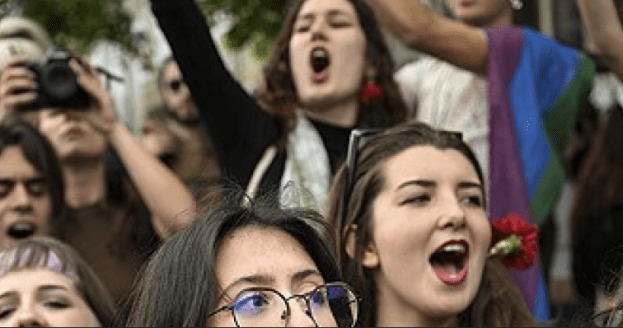
When I was in Lisbon, I learned about the hair scratching and tugging that Portuguese women would do to communicate with others in public under the fascist regime of António de Oliveira Salazar. I thought of this again in seeing how the Trump regime in the United States is cracking down even more on free speech and on the media.
The “Estado Novo” (the name given to the Portuguese fascist regime) made women second class citizens. Fear ruled their daily lives as patriarchy was paramount. Men could do anything to women without worrying about the repercussions. But they found ways to subvert the oppressive system. And creative communication became a vital tool in this resistance.
The youngest generation understands this now. They have mastered a form of communicating that has confounded older people. Indeed, their use of mixed political symbols and phrases are baffling the agents of the current fascist order. And that is a good thing.
As the forces of fascism seek to consolidate their power and control over the media narrative and landscape, many will need to learn how to communicate differently. And understand this as not only a means of survival, but as a form of resistance.
It may be as simple as a hair tug or a carefully placed pin on a lapel, or it could be the way we post on social media or communicate in emails. It may mean creating an entirely new medium or platform outside the control of billionaires. But what we do could have enormous ramifications for the future under a regime intent on crushing any dissent or speech it deems unacceptable.
Kenn Orfanos, September 2025
 Kenn Maurice Orfanos (Orphan)