It was a couple years ago that I saw my first glacier. I was on a trip to Alaska with my family before my father died. He had always dreamed of seeing the region, and we were happy we could do this one, last trip to fulfill it for him. We cruised through the Inside Passage past glaciers glimmering with cerulean blue ice, drove through part of the Yukon Territory of Canada by turquoise lakes, and hiked close to one of the last, ever receding glaciers. All of it was as awe inspiring as it was heartbreaking.
I am one of those people who finds it difficult to set aside what I know about the planet and where we are headed, and simply enjoy the moment for what it is. I cannot walk through a forest without feeling a sense of dread that it will someday be felled. I cannot watch whales breaching the waves without wondering if they will die out in my lifetime. I cannot see a glacier and ignore the overwhelming evidence that globally, they are in retreat. And I have come to realize that I am far from being alone in this feeling of joy mixed with sorrow.
Grief in the West is often viewed as some kind of disorder to be dealt with by pushing it away, ignoring it or medicating it. We often hear well meaning people suggest to the bereaved that they “keep themselves busy.” If our grief lingers, we are told that we are “depressed” or “not coping well” or that we need “closure.”
The reality is that our consumer culture is incapable of understanding grief. It is designed to ingest anything and everything just to keep it going. It does not pause for reflection. It is a giant throat ravenously swallowing the earth with our soul along with it. But this culture is destined to slam into a wall of reality on a finite planet with dwindling resources. There is a point of no return and it is closing in fast, and no distraction or technological fix will be able to stop the impending crash of a system that is fundamentally flawed. One way or another, we will have to face the crimes we have committed against the natural world on which we all depend.
I, like many others in the West, understand the paradox of where we stand. My family and I took this journey to Alaska thanks to our inordinate privilege. By global standards we are wealthy and benefit from being born into one of the most powerful empires the earth has ever known. And while many of us in the West mourn what industrial civilization has done, most of us still benefit from its excesses, wars of plunder and ecocidal convenience. But none of us can avoid getting caught up in the coming turmoil. It is a tide that will sweep all of humanity into its chaos. It has, in fact, already begun to do so in many areas of the planet, although this is carefully obscured by the wizards of Western, consumer society.
But perhaps if we shun the impulse to avoid feeling despair, as this culture encourages us to, we can step into our sorrow and walk with our grief as a companion rather than an adversary. In doing this we may be able to open up corridors of empathy and compassion for each other and the myriad of species we share this planet with. Grief can be a guide through the wilderness of alienation that this society perpetuates. It can deepen us and open our senses to a force greater than ourselves. It won’t spare us our fate, nothing can. But it may spare us a kind of spiritual death.
Standing on the deck of the boat, passing under great mountains of melting ice, I felt that sense of wonder that a child does when struck by the awesomeness of life itself. I also felt immensely small. My heart beat with an ache as I attempted to comprehend what my species and, in particular, my society has done to this precious life giving earth. I felt the cold air from that melting glacier roll over me. But this time I decided to not chase that specter of sorrow away. I embraced him like a long lost friend. And he smiled at me and said, “what took you so long?”
Kenn Orphan 2015
This essay is dedicated to the memory of my father, George Orphan, Sr. (June 7th, 1925 – November 25th, 2014). You will be forever in my heart and I can never repay you for the gifts you have given me.
This week Austrian police discovered the bodies of 71 migrants in a truck by the side of the highway outside Vienna. It is widely believed that they had suffocated to death when they were abandoned by their smugglers. One cannot fathom the horror and agony they must have suffered; but it is a story that is fast becoming the norm. Indeed, thousands have perished in their valiant attempts to cross the Mediterranean, well over a 100 just this week. In the Americas, untold numbers have died on their journeys north out of Central and South America. On the Andaman Sea boats brimming with starving members of the Rohingya community languished in limbo for weeks because no country would admit them. And when they reach the border their ordeals are far from over.
In Macedonia, police forces beat and tear gassed scores of refugees attempting to leave Greece; and hate crimes against undocumented immigrants in the US and Western Europe are on the rise. None of this should come as any surprise to those of us who have been paying attention; but it does not make what we are seeing any easier. This year a combination of climate change, perpetual war and economic devastation has forced huge surges of people all over the world out of their native lands in their quest for survival. The Great Migration has begun; and I must admit, it has started far sooner than I had ever imagined.
Of course, Western leaders are reacting to this unfolding human tragedy in typical fashion. They are either spewing racist vitriol and stoking the most base fears of their constituents, or blathering on with patronizing platitudes about immigrants and their plight. Whether it be US presidential candidate Donald Trump proudly demonizing undocumented immigrants as rapists and murderers to cheering crowds, or German Chancellor Angela Merkel callously explaining to a sobbing 14 year old Palestinian girl, whose family faces deportation to a land that is foreign to her, that “politics is hard sometimes,” the message to migrants could not be clearer: We do not care about you. We will not help you. And we will certainly not take responsibility for the foreign policies, economic exploitation and military assaults we launched on your nations that destroyed your societies and caused you to flee in the first place.
The disconnect from reality is stunning, but predictable. Indeed, if Merkel or Obama or Clinton were to acknowledge that it was their governments that destroyed and destabilized Iraq, Afghanistan, Syria and Libya, their entire house of cards would collapse to the ground in a smoldering, hypocritical heap. And if Trump or Bush were to acknowledge that it has been US neoliberal economic policies that have created the dire circumstances in Mexico, or in Central and South America, that have forced tens of thousands to flee for survival, their dehumanization of refugees and migrants would be shown for the vile, empty rhetoric that it is.
In truth all Western leaders, politicians and oligarchs alike, sit atop a historic pyramid of oppression and exploitation that is not of their own making. But each successive US president and Western leader has preserved the integrity of this system by faithfully growing the military/police/surveillance state and rewarding the wealthy elite with more and more loot, and bailouts and impunity for their crimes. This scheme, however, is beginning to unravel. And we need only look to the not so distant past to get an inkling of what lies ahead.
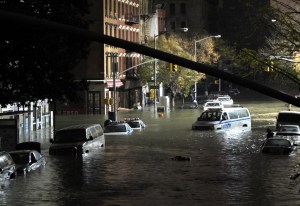
This week marks the tenth anniversary of Hurricane Katrina, and it should also serve as a wake up call for those Americans, and Westerners in general, who are still under the misconception that their government has their back in disaster. With more millionaires in the Senate, and unlimited money influencing elections, it should be clear to anyone that the United States is effectively an oligarchy with little to no regard for the poor and most vulnerable.
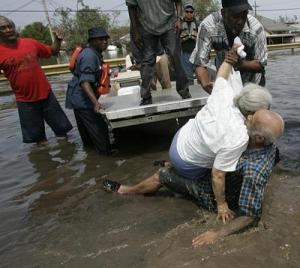
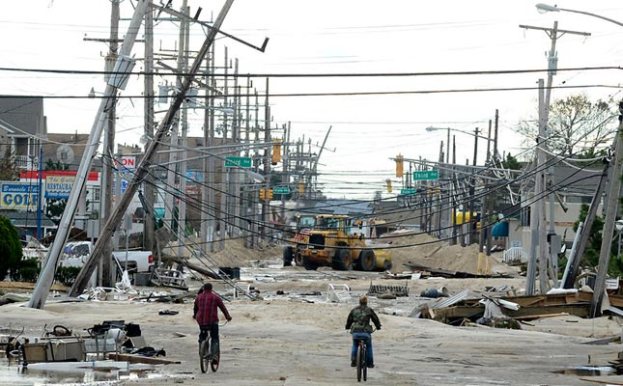
All of this was made plain in the weeks and months following the storm and subsequent floods in New Orleans and the region. Over a thousand lost their lives, tens of thousands more lost their homes and livelihoods. But the majority of those who suffered were poor people of color; and the American Empire had better things to do than dispatch the military in full force for rescue operations of its own citizens, especially when they had little or no money to offer them in return. After all, they had already over extended themselves in a war, based upon lies, against another group of poor, brown people on the other side of the planet.
I still remember the mainstream media and some politicians calling the victims of Hurricane Katrina “refugees,” a label previously unheard of in the West. They had been abandoned by their government and it should have served as a warning to us all. No matter how much our leaders “otherize” those who are forced to abandon their homes and dire circumstances, they are a reflection of our collective future.
Although climate change will have unpredictable ramifications; it is becoming more apparent by the day what our world will begin to look like in the decades to come. It all but promises a North American West that will become a virtually uninhabitable desert. Rapid glacial melt will see Amsterdam, London, New Orleans and half of Florida submerged under the waves of an ever acidifying ocean, bereft of much of its life except for an abundance of jellyfish, invasive sea grasses, toxic algae blooms and plastic debris. Paris and Tokyo will see heat waves that rival anything we have seen so far in India or Pakistan. And more and more species of wild life will fall to extinction. With all of this it is hard to imagine that mass migrations will be a fate assigned only to the poor of the “developing world.”
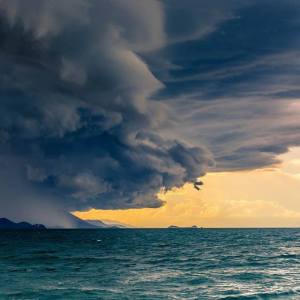
Undoubtedly, there is an epic storm brewing that threatens all life on this planet; and it is building up steam before our eyes. Those of us who tell this painful truth can expect to be labeled “doomers,” or fatalists, or be exiled from the conversation completely. But there is a point at which this exile from a deluded, shallow and corrupt culture becomes a welcome gift.
The powerful elite have absolutely no plan to address what is coming outside of drumming up racist xenophobia and fear of the other, and continuing on with the “business as usual” paradigm that has driven countless species to their extinction and ushered in the epoch of the Anthropocene. And the conference that is due to convene in Paris this winter is merely a charade to pantomime concern and action.
Do not expect any ideas from the corporate owned media either. Their job has always been to be a mouthpiece for the wealthy elite and to keep the masses distracted and subdued. They will continue pouring out celebrity gossip and stoking fears about things that pose no significant threat to the West, like Ebola or ISIS, even as the fires rage and waters rise. Encouraging objectification and mindless consumption is their sole charge. Considering all this, to look for salvation from those with power and wealth, even the ones who may appear more sympathetic to ordinary people, would be the height of foolishness.
Indeed, the only sane way to approach this storm is by realizing that ignoring it will not make it disappear, acknowledging that no one will be spared its wrath, and banding together in solidarity with others of like minds and souls. Doing this is unlikely to save our civilization as it is, or spark empathy in the powerful. And it will not stop the unfolding nightmare of climate change and mass extinction. But it may give us the courage to stop believing the never ending lies of nationalism, and help us to dismantle the artificial barriers that the elite have erected to keep us fearful of each other. We can begin right now by looking at the immigrant and the refugee as though they were us. Because, in all truth, they are.
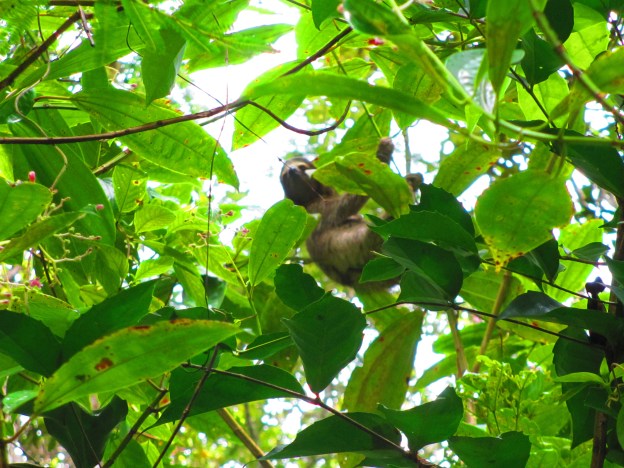
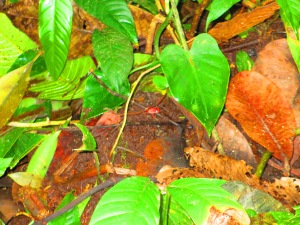
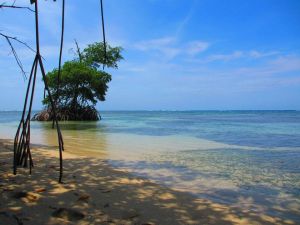
Several years back I had the good fortune of traveling through the rainforest in a remote part of Panama. Along the way I stayed in a small cabin at an ecolodge with the warm waters of the Caribbean Sea just steps away. There were no roads, televisions, or internet access, and no phones or electricity except in the main house. Out back was a trail that meandered through a dense forest brimming with tree frogs, sloths, iguanas, leaf cutter ants, and countless species of birds hopping from branch to branch. Just a couple feet into the water and I counted dozens of bright orange sea stars. And at night the sea shore came alive with biolumeniscent dinoflagellates, who would respond to my flashlight signals in short bursts of blue-green neon and the canopy was a cacophony of countless species in song. The abundance of life in that tiny corner of the world crowded out most signals of modern civilization.
But as with any trip like this, I eventually had to return home where the reality of “The Great Dying” is everywhere. Like climate change, the Sixth Mass Extinction, is not a hyperbolic, political trope. It is in fact the death of most complex forms of life on earth at our own hands. And by all accounts, with mass die offs of bees, coral, salmon, frogs and beyond, it is in full swing. Elizabeth Kolbert, author of “The Sixth Extinction” makes this plain:
“If we assume, very conservatively, that there are two million species in the tropical rainforests, this means that something like five thousand species are being lost each year. This comes to roughly fourteen species a day, or one every hundred minutes.”
Yet in the midst of this tremendous catastrophe, the magicians of our consumer society continue to normalize the carnage. Indeed, under the economic model of global capitalism all life, human and non, is measured by its ability to produce or create material wealth for a select, privileged few. And it is a system that encourages both amnesia and indifference. So it is unsurprising that mass species extinction barely registers on its radar unless their profit line is affected. This is how over fishing, clear-cutting of thousands of acres of virgin forests and piercing the Arctic seabed for oil, like a fiendish vampire sucking out the earth’s primordial blood, can all be justified and even celebrated as “growing the economy.” As long as it produces intangible numbers that indicate wealth it is all fair game. And in the meantime it manages to numb our senses to the spiral of death that is beginning to engulf us.
I often go back to places like that rain forest in Panama in my mind when I feel hollowed out from the alienating sterility of modern society. It is a sacred place in my memory that is a balm to the wounds inflicted by the landscapes of capital. A part of me never wishes to actually return there, because I fear that, like so many other wild places, I will be struck by the cruel realities of a world under siege. I fear my own memory of all the creatures that are no longer there. But this is not how the story should end.
These species at the very least deserve the recollection of their existence; and the only way to break free from the indifferent paralysis imposed on us from an apathetic, self-absorbed culture is to remember, and mourn and take action. Indeed, the catastrophe unfolding around us can be overwhelming; and we may not be able to hold back the enormous tide of destruction coming our way. But we have a choice. We can step into our grief, feel the pain and use it to deepen us and our capacity for compassion. Or we can sleepwalk through it all into oblivion, normalizing the cruel madness, as the dominant culture encourages us to do. One way has the potential to lead us to meaning and enrich our lives no matter what the outcome. But the other will surely deaden our souls and lead us to our doom.
Kenn Orphan 2015
Kenn Orphan 2015
(1) “The Sixth Extinction” by Elizabeth Kolbert at Amazon:
Many ancient civilizations in their declining days were swept into hysteria and superstition as famine, war, drought and disease engulfed their societies. In some, sacrifices of both animals and human beings exploded in efforts to appease their angry gods. In others, minority ethnic or religious groups were persecuted for heresy or violations of sexual mores. One might think that in a time when human beings have reached the moon, and mapped the human genome, such antiquated notions would cease to persist. But according to a poll by the Public Religion Research Institute in 2014, 49% of Americans attribute climate change to Biblical “end times.” And this belief is reflected in an astonishing number of political leaders. Earlier this month, for example, California Assembly Member Shannon Grove said publicly regarding the drought in her state: “Texas was in a long period of drought until Governor Perry signed the fetal pain bill. It rained that night. Now God has His hold on California.”
Sadly, with climate change accelerating, the apocalyptic narrative these Americans foresee is becoming inevitable. What is additionally troubling is that many, as in past civilizations, see this as God’s punishment for what they perceive to be sexual immorality or apostasy. With history as a guide, this suggests that some could be easily swayed by a fanatical zealot to scapegoat and persecute LGBTQ people, immigrants, Muslims, feminists, socialists and any minority or marginalized group in this country, for the expected ramifications (drought, extreme weather, etc.) of a warming planet.
Because so much of the population has been purposely mis-educated when it comes to science, how nature works and the dire impact we are having on it through our mindless consumption and reckless industrial growth, religious fundamentalism has flourished in numerous parts of the country. The recent Supreme Court ruling on marriage equality has demonstrated this through comments made in its wake by conservative politicians, preachers and pundits. Add into the mix rising income disparities, infrastructure failure, water scarcity, militarization of the police and nuclear proliferation, and you have the perfect recipe for dystopia.
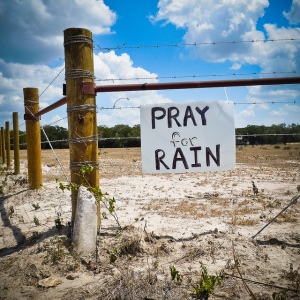
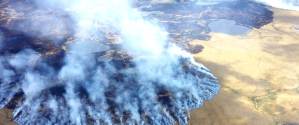
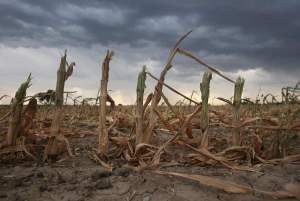
By all indications, the weather is becoming angrier and more unpredictable by the day. Drought is expanding, wildfires are rapidly growing, heatwaves are killing thousands, and ecosystems are being systematically decimated. And in the coming days we can expect to see more of this fanaticism grip the American psyche. Some will undoubtedly welcome the end in order to fulfill their religious interpretations of the afterlife.
To be sure, not everyone in United States subscribes to these extreme beliefs. And to most, spirituality and faith can be powerful forces of compassion and altruism in times of calamity. But American pop culture has insulated the majority of us in a bubble of illusion, filled with plastic products, new devices, reality shows, celebrity worship and other vapid distractions. And the corporate media has continued to foster an irrational fear of the other, dehumanizing the poor, the foreigner and those who differ from societal norms. A preponderance of the population are completely unaware of just how close humanity is to societal collapse and even extinction; and this ignorance provides fertile ground for zealots to spread bigotry and terror as very real, existential threats begin to emerge with intensity.
For those of us on the sidelines, observing all of this can be paralyzing. But believing we have any control over these unfolding events is a myth that does no one any good. Creative, moral imagination is born in the acceptance of impermanence and the unknowable future. Inhabiting the moment, with all of its uncertainty, joy and terror, is a sacred space for the devout and secular alike. And the agency that we do possess is to stand outside of the madness and fear. In this way we are able to meet the suffering of humanity, other species, and ourselves with simple compassion. And perhaps then we may be able to offer a passage to sanctuary and a bright light in the very dark days that lie ahead.
In the disintegrating days of any society, nationalism, political charade and vapid farce often become the dominant narrative of the elite. These serve as distractions from their malfeasance, and the malaise and dread that most people, whether conscious of it or not, are feeling at the deepest level of their psyche. They also reflect the mania that often grips the mind when disaster is looming. And unless we insulate ourselves within this rubric of duplicity, or are so busy with the tasks imposed on us by the act of living in a society with increasingly less agency, it is near impossible to ignore the ominous signs on the horizon. Reports about mass extinction, climate chaos and a rising militarized, totalitarian state are ubiquitous.
The other night I went out to the movies. This is not a big deal for many, but for me it is. I stopped going to see most Hollywood productions a while ago when I found myself increasingly alienated from the violent messages I saw being aggressively communicated. Much of it is nothing new.
Hollywood has always glamorized and championed patriarchy, gratuitous vulgarity, mindless consumerism and a detachment from the natural world. And it, ironically, has patted itself on the back for being at the forefront of social change, when historically it has dutifully supported and promoted the most entrenched, dehumanizing and churlish forms of racism, homophobia, misogyny, Islamophobia, and antisemitism. In truth it is the best mouthpiece for the status quo power class and a bulwark for the reactionary establishment. While conveniently recasting itself as a civil rights pioneer when all the hard work has been done, Hollywood takes credit for something it had once vehemently opposed.
Sitting there in the darkened theater, waiting for the film I chose to begin, I was barraged by a cacophony of violent jingoism in each preview of movies to come. The military was cast as the savior of the world, women were objectified in persistent, degrading stereotypes, and the “other” of foreign nations were dehumanized and vilified. Of course one can trace much of this back to WWII when the Japanese were portrayed as bloodthirsty, dim witted beasts.
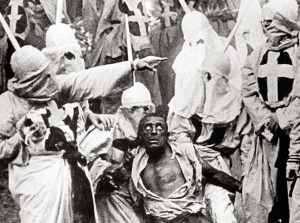
This insidious racism soothed the American psyche into justifying the nuclear decimation of tens of thousands of civilians and assisted the acceptance of the forced internment of Japanese Americans into concentration camps. One can go back even further to 1915 to the infamous film “Birth of a Nation” which depicted Black men as rapists and a danger to the entire republic. What better way to vindicate the horrors of Jim Crow and decades of state sanctioned terror via lynching parties? But over the last decade there has been a surge of hyper-masculine, chauvinistic nationalism depicted in film and media with technical flare.
Sadly, in the midst of all of this, many in America, and to a lesser extent other Western nations, appear to be retreating into a form of infantilism, clinging to religious mythologies about “end times” and supernatural tampering with humanity, or nefarious government conspiracies around every corner. This is a common response to a sense of powerlessness. Ironically, these fantasies coincide with the very real prospect of collapse and even near term human extinction. But those who are confounded by reason, overwhelmed by a merciless onslaught of disinformation, and battered by class oppression, will often attribute calamity to the divine’s wrath at innocuous human rights and social issues like marriage equality or women’s reproductive freedom.
Hollywood nourishes this confusion by inducing a national amnesia regarding what their country has done and what crimes it is capable of committing, both at home and abroad. It achieves this by producing a never ending stream of series or movies that retell and re-frame Biblical stories, or are about natural disasters (most of which are implausible), supernatural beings like zombies or vampires that compete for gloulish and macabre attention, or imagined threats from foreign “others” who represent everything we despise. In truth, the wealthy power class has always thrived on violence and the incitement of division. It has been and remains the currency that they use to hold on to power and maintain the barrier that insulates them from its consequences. It is the drug of choice for brutes and psychopaths; and when it is unbridled it deftly manages to hollow out the very core of human dignity. How else could the US military, which has a long, documented history of heinous human rights violations, convince young, disaffected youth to join their ranks to fight people abroad far more impoverished than they are? How else can they cajole them to defend an empty concept of liberty that has been systematically hacked away from them at home?
Ultimately, violence masks the alienation from society and estrangement from the natural world that so many of them feel. It is the doom of virtue and the supreme manifestation of despair. The plutocracy has become unbeatable through its use of it abroad; and it has deftly worked at militarizing the police at home. They have become masters at harnessing its seductive lure; and there is no armed resistance that can counter their forces. They eagerly manufacture new, re-branded enemies to divide and conquer the beset masses; and distract them from their powerlessness. But now we are teetering on the edge of global collapse and the charades are becoming a nightmarish, technologically advanced, spectacle. From desensitizing video games to movies extolling the glory of war; the machine of propaganda is at fever pitch.
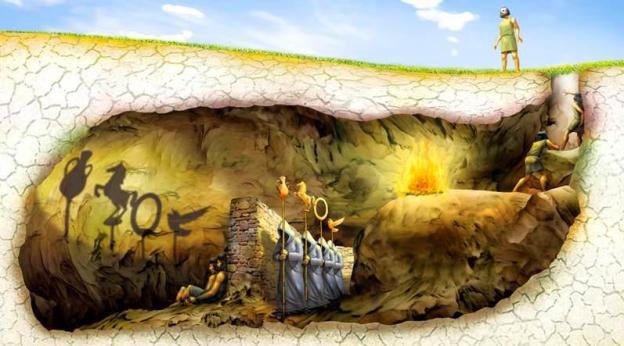
As the US empire continues to expand its reach through its spread of military bases, and its constant antagonism of other world powers, like China in the South China Sea or Russia in the Ukraine, we can expect reactionary nationalism at home to be stoked further. It has even expanded the war on nature, as the US Navy prepares to conduct military exercises, the largest of their kind in history, in the pristine waters off Alaska and in the Arctic. And with the curtain falling on Western civilization through its own hubris, Hollywood will become even more manic and detached from reality than it is today. It is, after all, the global voice of corporate capitalism and it faithfully follows the dictates of Wall Street and the Pentagon. Sadly, it cannot do anything but limn the lies of empire, even as ecosystems fall around them and war and totalitarianism become permanent features of the 21st century. How long it will be able to cast its shadows on the wall of this cave, before it all comes down around them, is unclear. But we do have a choice on whether to continue watching the spectacle, or turn away in time to salvage some of what is left of our humanity and this world.
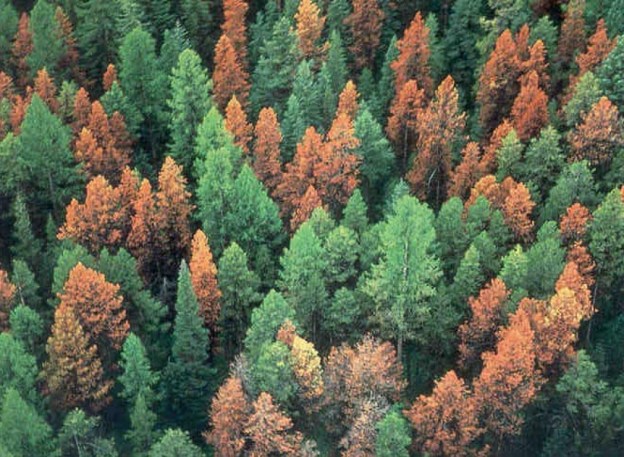
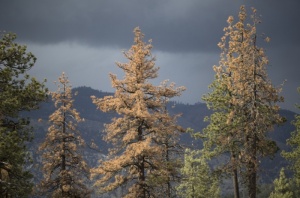
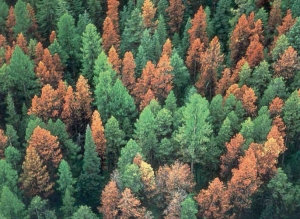
It was a little over a year ago when I was on a meditation walk, in a beloved park, that I began to notice trees that once provided me shade and a sense of embrace were now starting to go brown, only it was not Autumn, it was Spring. Since then a sense of sadness and alienation has followed me as I chart my course through the new world of the Anthropocene.
That day I walked as I usually did. My speed started in a measured manner. I took the paths I usually took, walked by familiar sights and listened to familiar sounds. But there was one sound which I could not initially identify, and it was persistent.
At first I did all the things I our society has taught me to do; I invented things in my mind that soothed my conscience and searched my memory for any distracting thought. But the sound was incessant and unyielding. Then, suddenly, it was undeniable. It was the sound of wailing. When I realized what it was I was hearing, my pace quickened. I felt that pain one feels in their heart when brutally confronted with loss and grief, and it overwhelmed me. The trees around me were dying slowly and in obscurity, crying in silence in the deafening din of civilization’s march of progress.
We don’t listen to trees in this society. I know this very well. But I’ve got a secret that many of you may share. I have always heard them. Now admitting this in some circles might earn you a one way trip to a psychiatric ward. But I can no longer ignore the lamentations around me. And as time goes on I care less about what others think of me or the consequences of my truth telling. There were others on the path who crossed my way. Parents with strollers, young lovers holding hands, old men strolling the speed of snails. But none of them seemed to notice that the non-human world around them was suffering. Life seemed to go on as it always has.
Our society trains us to avert our senses to what is literally before us, marshaling our attention to narcissistic celebrities or the latest iPhone. Mindless consumption, whether of entertainment or objects, is the national religion; and the high priests of Wall Street and Madison Avenue work over time to ensure that their profits grow exponentially, regardless of the cost to other human beings or to the countless species with whom we share this planet. But the signs surround us all. Climate chaos is nearly upon us, if it isn’t already. And truthfully, we have been given ample warning of the consequences of our way of life. Now the Great Dying, the Sixth Mass Extinction, is in full swing.
The mechanisms of Western civilization are constantly conspiring to prevent us from contemplating all of this. To the powerful, doing nothing is a lazy, if not punishable, offense. It is not a surprise that in such a system loitering is a crime. If we are not consuming, we become suspicious to the established order. When we are not at work we are expected to shop, or eat, or drink, or drive somewhere, or watch something, or text, or check Facebook. This is because all of this requires our attention to the consumption of something. But if we find ourselves still and quiet, without being asleep, we may hear the sorrow we have inflicted on the nature that surrounds us through this rapacious devouring.
If we manage to loosen the grip of consumer culture on our consciousness, for even a short time, marvelous things can happen. I have learned that this is not an easy or one time practice; on the contrary, it is the hardest task we will ever do. It will not spare us from all of the calamity that lies ahead. It offers no redemption for humanity’s crimes. But it may carve out a sanctuary in our soul from where we can draw strength when the gales commence and the water rises.
The ears of society have been deafened to the wails of countless beings on this life drenched earth. It is high time we started listening again, like our ancient ancestors did, to express our grief, stir our imagination and, most important, enliven our compassion, while there is still time left to hear.
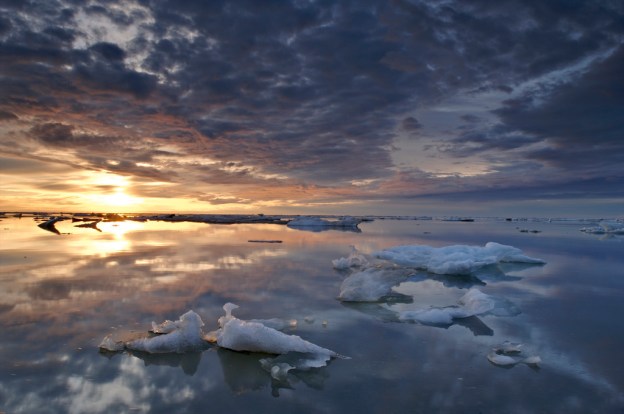
In the past few years scientific models have been sending humanity a rather ominous message: evidence indicates that the earth’s climate has taken a dangerous and irreversible turn. As the once frozen Arctic Ocean rapidly liquefies into ice free summers, releasing tons of the potent greenhouse gas methane, and desertification stretches out across new regions, weather patterns around the globe appear to be spiraling out of control in a nonlinear manner. Each passing month we have seen record after record be demolished. The spring of 2015 has been catastrophic with scores dying from heat waves in India, forest fires in Siberia, monstrous floods in Texas, southern China and Eastern Europe and an intractable drought in the American west, the Middle-east and Brazil. And with an El Nino looming, summer and autumn are shaping up to be even more ferocious. Yet despite the recent, historic People’s Climate March in New York City, the machine of capitalist driven consumption grinds on unabated, undeterred and unconcerned about the impending collapse.
Amidst the unfolding chaos some of us still look to the environmental movement for answers, solace, or even hope. After all, it sprang out of sickness and grief at what this machine was doing to the natural world. It grew from the heart of empathy for all life, human and non. But the failure of the movement was in its acquiescence to capitalism. In so doing it imploded the consciousness of substantive transformation.
Capitalism, in its very essence, is about endless growth and exploitation of the environment for material gain. It is kept alive by a monetary system derived from how much energy is produced and consumed. And in the global “free market” system environmentalist causes may be soothed at home; but in far flung nations the earth and the poor are continually battered and raped by corporations and the corrupt governments that house them. Sweat shops abound, virgin forests continue to be razed for palm oil, poaching keeps animal populations constantly on the cusp of extinction, rainforests and wetlands continue to be polluted by mining companies and Big Oil, and the oceans remain the most abused natural resource on the planet. And militarism, which is of course married to capitalism, ensures that all of this exploitation can continue and expand while hiding it under a cloak of nationalistic jingoism, ironically extolling the fight for freedom and liberty while defending the greatest slaver of all time.
Under neoliberal capitalism, which Wikipedia defines as “privatization, fiscal austerity, deregulation, free trade, and reductions in government spending in order to enhance the role of the private sector in the economy,” the environmental movement morphed into what it is today, a meaningless exercise aimed at maintaining the implausibility of endless, mindless consumption with the veneer of concern for ecosystems. It has become all about “sustainability” despite the contradiction of it sustaining a system that is ultimately self-destructive. And it has branded itself with euphemisms like “green” or “earth friendly,” as if our species were somehow alien visitors to this planet and being friendly to it was a diplomatic concern. Of course many have been cajoled by the flashy promises of mega corporations that co-opted the environmental movement for profit. And certainly, a handful of corporations did in fact change some of their practices under public pressure and for the sake of image; but the primary engine of capitalism that has led us to the brink of devastation was never halted. It merely greenwashed its planet killing practices through slick marketing campaigns. Even oil companies, the wealthiest and dirtiest of businesses, has attempted to greenify its public persona.
It cannot be over stated that it was fossil fuels that propelled neoliberal economics and defined Western society. Beginning with the sterile environment of the delivery room to the cold slab of the coroner, from birth to death we are bathed in it. Our food is grown and protected by it. Our communication and transportation is dependent on it. It is the foundation of modern medicine. In short, petrochemicals, whether in solid, gaseous or liquid form, have ensured us, the privileged few, a relatively predictable and easy ride through life. But this ease came with a hefty price. The burning of these fuels has caused an unstoppable surge in temperature that imperils it all. And the rapacious appetite of corporations for the earth’s blood has ruined entire nations with war and corruption, and led to the demise of countless species, with our own likely to be on the list in the near future.
It is a fair conclusion that Western civilization has been provided with flocks of squealing canaries warning us of the looming catastrophe that our political, media and business leaders deftly ignored in their quest for votes, ratings and profits. When a science denying cretin like Oklahoma Senator, Jim Inhofe, chairs the committee on the Environment and Public Works, or President Obama lampoons climate change deniers only to approve of Shell’s oil drilling ventures in the Arctic, one can easily see a complete dead end in elected officials. And the disinformation campaign of news outlets like Fox or the purposeful omissions of CNN present little hope in the mainstream media.
In truth, there are no answers to be found in the halls of Washington, the hills of Hollywood or the board rooms of Wall Street. They are all faithful servants of neoliberal capitalism, and have been laboring for years to dismember the commons, grow their inordinate wealth through plunder and maintain their dominance. The sacredness of the public space has been defiled by their liturgy of self absorbed narcissism. And they have manufactured a culture of cruelty, devoid of character and predicated on the commodification and exploitation of everything that exists. In this way, neoliberalism has become the most elaborate and successful form of brainwashing and social control the world has ever known, convincing hundreds of millions of people of the necessity of its economic tyranny.
But there is a longing for connection and solidarity with one another that transcends the mindless consumerism we have been spoon fed since birth. Therefore the most coherent response to what we are witnessing should come from ordinary people in community. And it should be organized before the fall is in full swing. The Occupy movement was a glimpse into how this can be accomplished. But if it, like any other social movement, is co-opted by a politician or party it will be crushed under its heel once in power. It is also worth remembering that all social movements, like Occupy, the Arab Uprising or Black Lives Matter, are a threat to the capitalist order and will always be met with state violence and distortion by the mainstream media.
Perhaps with these concepts in mind, despite the threat of a misanthropic power class, war, famine, and a very angry climate, our species will beat the odds this time too. Indeed, homo sapiens have beaten a lot of odds. Born of the stuff that spawned all life on the planet, in ponds rich with amino acids, we eventually evolved out of several incarnations and through some very close calls into what we are today. Arguably, our altruism and communal bonds provided just as much for our survival as our cleverness and cunning. But the value of living in community and honoring the other transcends mere survival, and technology will not save civilization. This is because it was, in part, technology which instilled in humanity the myth of separateness from the natural world, and the myriad of species we share this planet with. And thanks to the insatiable consuming technology of industrialism, the delicate and essential life giving systems of our world are on the brink of breaking down, that is if they have not already begun to do so.
Industrial civilization now encompasses the entire planet with less and less arable land, acidified oceans, less potable drinking water and billions more of us on the way. When one mixes in the threat of nuclear war or meltdowns, raging storms, sea level rise and pandemics the probability of collapse becomes more prescient. And it is worth repeating that our species hasn’t figured out how to live anywhere else than this earth. One would think that would be enough to spur us to action; because it would take nothing short of a miracle to beat those odds, and we are in desperate need of one. We are standing, however, at the precipice of a Great Fall; and it would be foolish not to recognize that civilizations, both past and present, have a remarkable way of doing themselves in without much outside help at all.
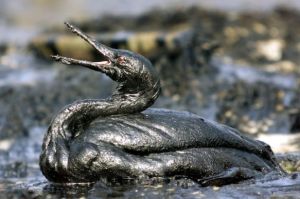
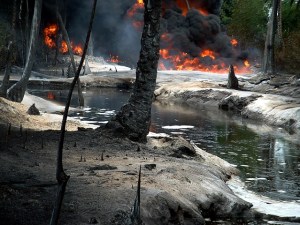
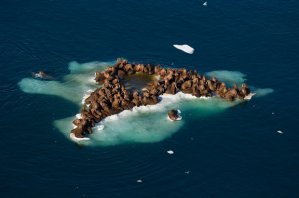
In May of this year, the fate of the Chukchi Sea in the Arctic Ocean was placed in the hands of a corporation responsible for decimating the once biodiverse Niger Delta. President Obama, barely a month after giving a speech that lampooned climate change deniers, gave the green light to Royal Dutch Shell to proceed with drilling operations in the remote, frozen and biodiverse region. Of course all the usual empty assurances accompanied this announcement; but history tells a different story. Countless oil spills and ravaged ecosystems around the world provide a litany of facts to easily dispel the industry’s hubris.
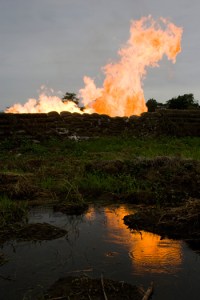
The Niger Delta is one of the most important wetland regions on the planet. Millions of people depend upon its migratory fish. But since Shell moved in the Delta has been systematically ravaged. Gas flares contaminate the air with benzene, causing birth defects and cancer among the indigenous communities. Over the past fifty years an estimated 1.5 million tons of oil has spilled in the ecosystem. In fact there is a long list of devastation around the world wrought by Royal Dutch Shell and it can be accessed here: http://www.corp-research.org/royal-dutch-shell.
Shell’s ecological destruction goes hand in hand with its brutal suppression of human rights. Its presence in the Niger Delta has brought deforestation, water pollution and poverty. Nearly 85 percent of all oil revenues go to less than 1% of the population in a country where, according to the African Development Bank, more than 70 percent live on less than one US dollar per day. Shell has had a long history of assisting and directing the Nigerian military in the violent suppression of dissent and protest; and Nigerian environmental activist Ken Saro-Wiwa presented a problem to the oil giant in that he organized defiance of their destruction of Ogoni lands. On November 10, 1995, Saro-Wiwa was among nine other Ogoni activists murdered after being convicted in a kangaroo court at the behest of Royal Dutch Shell in Nigeria.
But this is by no means limited to this one corporation. The fossil fuel industry is the most profitable business in human history. And it is accountable to no one. It funds the massive smear campaigns against climate change science, yet in its quest for Arctic oil it ironically dispels this denialism with its actions. As climate change accelerates the Arctic Ocean is melting. It is estimated to have ice free summers in just a few years, something that has never happened since humans stood upright. And now its reserves of oil and gas are being seen by the short sided, the powerful and the greedy as an unprecedented opportunity for exploitation. This story has no happy ending as it stands right now. When the first spill happens there will be no way to clean it as no technology exists. There will be no one who will be able to stop the gushing of the earth’s toxic blood into the sea. The wealthy will jet away to their seclusion and count their money while the planet burns; and the poor of the world will shoulder the hardest burdens our civilization has wrought. Countless species, some yet unknown, will die silent deaths in obscurity. And after the Niger Delta, the Alberta Tar Sands and the BP oil disaster in the Gulf of Mexico, it will become one more visible lesion our species has inflicted on the flesh of the earth.
To succeed in America, we are constantly told, is to occupy a cubicle: in an office, in a suburb and, finally, in one’s own mind. We internalize the belief that attaining the carrots of meretricious wealth maliciously dangled before our eyes will somehow fill the void created by industrial civilization itself. But the limits to this folly are obscured by its ubiquitous distractions. It is a terrain of self-delusion, divorced from reality and self-medicated to numbness.
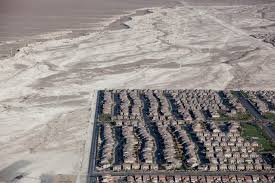
Nourished by the fossilized blood of the ancient earth, this nightmarish landscape of banality flourishes almost endlessly across the horizon. Insulated enclaves of cloned track houses, featureless monolithic office buildings, green golf courses and flowing water are surrounded by parched earth and razed wilderness. It is architecture designed for alienation. It is the triumph of extraordinary conformity and authoritarianism. And it is a celebration of blind and insatiable consumerism for the benefit of the privileged few.
The American psyche has been conditioned to resist deepening or self-examination thanks to the merchants of Wall Street, Hollywood and Washington DC. They aver that endless growth is necessary, good and even patriotic. In reality they are a gang of self-aggrandizing thieves who present themselves as a vanguard here to save us all; and their task is a simple one. They must maintain the unassailable sacrosanct liturgy of capitalism and the mythology of the free market while reducing the natural world to monetary units, replacing the commons with strip malls, and placing life, both human and non, into categories of productivity or disposal. They must manipulate base prejudices against “the other” with jingoism to induce compliance for imperialistic wars of plunder. They must shrink wrap all that is sacred and life-giving into commodities and parade an endless spectacle of manufactured outrages and celebrity gossip/worship.
But keeping up appearances is untenable and not very sexy when ecosystems are collapsing around you, reservoirs are drying up, and species are rapidly going extinct. The absurdity of their scheme is evinced in their simultaneous denial of climate change and rapacious attempts to extract oil from a rapidly melting Arctic Sea. Such paradigms have the habit of doing themselves in; and this one appears very close to full on collapse. It is death by a thousand cuts or, in this case, a thousand climate change induced storms and droughts.
Where then does this all leave those of us who cannot look away any longer? We can join the ranks of those who wish to reform the system; but how does one reform a metastasized cancer? Most of us have rooted ourselves in self-delusion, partly out of apathy, but mostly out of defeat. The magicians of wealth and power can put on a dazzling show. And liberation from the claustrophobic confines of their corporate controlled prison of illusion is not easy. It is also neither sudden or permanent. It requires constant attention and re-visiting. But as in Plato’s Allegory of the Cave we possess the power to spurn the shadows on the wall and rise to the surface of our own accord and, in the process, help others who are weary clamber their way out too. The puppeteers be damned.
In the light of day the banal landscape of mindless consumerism shatters to create possibility even in the midst of devastation and despair. The vapid forms of entertainment and celebrity adoration that were once alluring, crumble to heaps of hackneyed dust. Here there is no object that can replace the soul, no product that can entice away from the birthright of nature or human connection.
What becomes of us who cannot live comfortably anymore within the emptiness of consumerism? Where do those of us who can no longer ignore or placate the death machine of industrial civilization go? We are pushed out of the cave and to the margins of the empire. We are forced to the surface. And it is there where we can either languish or decide that freeing our soul is worth the price of exile and even persecution. In any case, the view at the top is magnificent.
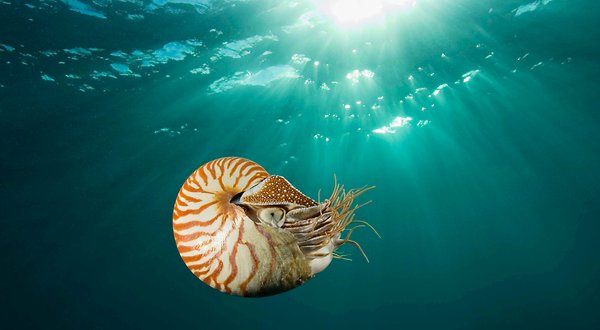
The chambered nautilus demonstrates a marvelous grace that is next to impossible to describe. The name nautilus is derived from Latin for “sailor.” And indeed, it has traversed the world’s oceans for millions of years, virtually unchanged. Some may think that a failure of evolution; but in its enduring form it has proven this assumption wrong. Human beings have only walked this earth for a blip of its sojourn, a mere 200,000 years. And, given our penchant for avarice and aggression, it is not yet clear we will survive even a fraction of a blip more.
Biologists around the world have been racing against time to collect as much information as they can about species like the nautilus. Species that are now imperiled with imminent extinction. It is a noble pursuit, if not one racked with sorrow. The Anthropocene Epoch, or the age of homo sapiens, is defined by our continued destruction of the climate and every ecosystem on earth. Epochs are generally identified by what, or in this case who, has the greatest influence. What’s ironic is that although this epoch bears our name our species is unlikely to survive long enough to see its end. And sadly, the devastation we have wrought will continue long after we are gone.
It is debatable whether the damage our species has done will prevent this planet from seeing another epoch of life emerge. But there is hope. Extremophiles like the tiny tardigrade, or water bear, prove that life can beat odds that we humans would never stand a chance at. Like the nautilus, the tardigrade stands as a living testament to perpetuity. Extreme heat, extreme cold, cosmic radiation, no water, none of that matters to this remarkable creature.
Perhaps in a few hundred thousand or even millions of years, after the radioactive fallout from our reckless ventures in nuclear technology abate, and the seas return to a liveable pH balance, species like these will once again ignite an explosion of life on this planet. Maybe the conditions will be right for one of these species to evolve toward a complex society. We will never know. But we can only hope that if they do they will have the wisdom to avoid our mistakes and follies. And maybe, unlike us, they will be able to sustain a deeper and lasting appreciation for this life drenched ball in space we call earth.
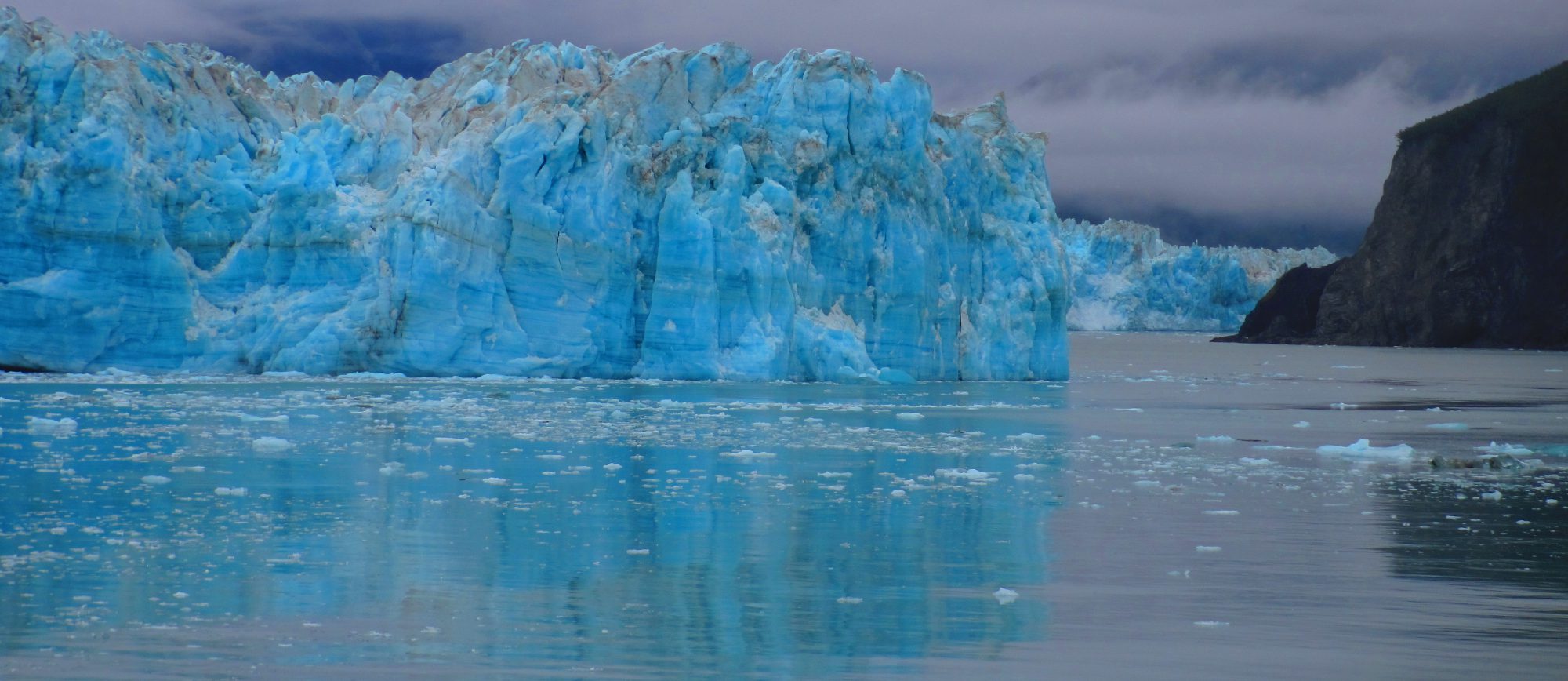
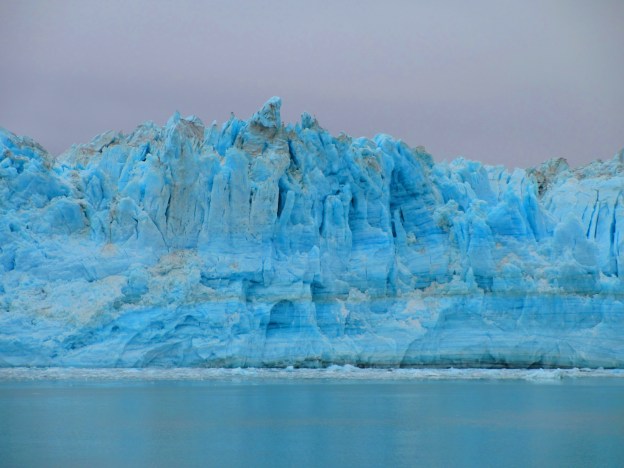
 I am one of those people who finds it difficult to set aside what I know about the planet and where we are headed, and simply enjoy the moment for what it is. I cannot walk through a forest without feeling a sense of dread that it will someday be felled. I cannot watch whales breaching the waves without wondering if they will die out in my lifetime. I cannot see a glacier and ignore the overwhelming evidence that globally, they are in retreat. And I have come to realize that I am far from being alone in this feeling of joy mixed with sorrow.
 Grief in the West is often viewed as some kind of disorder to be dealt with by pushing it away, ignoring it or medicating it. We often hear well meaning people suggest to the bereaved that they “keep themselves busy.” If our grief lingers, we are told that we are “depressed” or “not coping well” or that we need “closure.”
 I, like many others in the West, understand the paradox of where we stand. My family and I took this journey to Alaska thanks to our inordinate privilege. By global standards we are wealthy and benefit from being born into one of the most powerful empires the earth has ever known. And while many of us in the West mourn what industrial civilization has done, most of us still benefit from its excesses, wars of plunder and ecocidal convenience. But none of us can avoid getting caught up in the coming turmoil. It is a tide that will sweep all of humanity into its chaos. It has, in fact, already begun to do so in many areas of the planet, although this is carefully obscured by the wizards of Western, consumer society.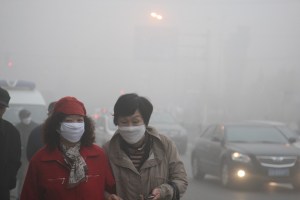
 But perhaps if we shun the impulse to avoid feeling despair, as this culture encourages us to, we can step into our sorrow and walk with our grief as a companion rather than an adversary. In doing this we may be able to open up corridors of empathy and compassion for each other and the myriad of species we share this planet with. Grief can be a guide through the wilderness of alienation that this society perpetuates. It can deepen us and open our senses to a force greater than ourselves. It won’t spare us our fate, nothing can. But it may spare us a kind of spiritual death.
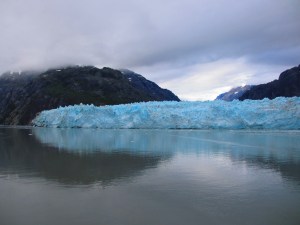 Standing on the deck of the boat, passing under great mountains of melting ice, I felt that sense of wonder that a child does when struck by the awesomeness of life itself. I also felt immensely small. My heart beat with an ache as I attempted to comprehend what my species and, in particular, my society has done to this precious life giving earth. I felt the cold air from that melting glacier roll over me. But this time I decided to not chase that specter of sorrow away. I embraced him like a long lost friend. And he smiled at me and said, “what took you so long?”
 This essay is dedicated to the memory of my father, George Orphan, Sr. (June 7th, 1925 – November 25th, 2014). You will be forever in my heart and I can never repay you for the gifts you have given me.























































 Kenn Maurice Orfanos (Orphan)