Tag Archives: consumerism

Suffering in the Congo: the High Price of Technology

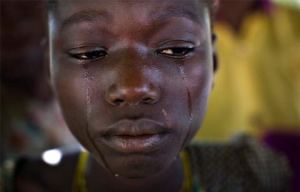
congo-2In all likelihood, the Smartphone that many Westerners carry around all day, checking messages, taking ‘selfies’ and downloading apps, was manufactured with minerals extracted from a nation decimated by genocide and imperialistic plunder.  Much of the cobalt and tantalum used in the electronics industry is harvested from central Africa, and mainly from one former Belgian colony.

Beginning with the murderous, genocidal King Leopold II of Belgium, who was responsible for the murder of nearly 10 million people in the 19th century, and leading up to the US corporate raiders of this century, the Democratic Republic of the Congo has been continually robbed of its rich human and natural resources.  In 1961 the Belgian capitalist elite and the CIA backed the assassination of democratically elected president Patrice Lumumba.  This set in motion the turmoil and suffering the people of the Congo now live with today.  Lumumba, like countless other leaders around the world, was disposed of by the Western hegemony because of his gall to defend his own people against foreign robber barons.  Ignored by a subservient United Nations, the new junta government murdered Lumumba by firing squad.

The US and Belgium, along with most of the West, then installed the murderous dictatorship of Mobutu Sese Seko.  Despite his looting the country of billions of dollars and committing brutal and heinous human rights violations, Seko, enjoyed a close friendship with several US presidents and was honored at the White House by Ronald Reagan several times.  Following his exile, the DRC was plunged into mayhem for over a decade.  And it is estimated that 6 to 10 million Congolese have been killed in what can only be termed as genocide.

Slavery, land grabs and violence have decimated this beautiful land with seemingly no end in sight.  The systematic rape, mutilation and torture of women and children has been used to demoralize and dehumanize millions of Congolese, while the mainstream media generally ignores their plight and world leaders mostly look on with apathy.  And today this travesty continues chiefly by the support of US foreign policy which lends aid to its rival nations, Rwanda and Uganda, as its presidents, Paul Kagame and Yoweri Musuveni, strip it clean of its natural resources for Western corporate interests.

It is in this way more than any other that Western colonialism never ended in Africa.  It continues through the vehicle of free trade and globalization, which mask the ugliest facets of neoliberalist policies.  And it continues through the blind exploitation of resources for the sake of Western technology and insatiable consumerism.  The Congolese have no agency while such powers are permitted to plunder for profit.  And the carnage will only grow beyond what is arguably the biggest genocide the world has seen since World War II.

Kenn Orphan  2014

(Photo: REUTERS/Finbarr O’Reilly)

*For more information on this issue I highly suggest reading the fine journalistic work of Andre Vltchek.
The Map Out

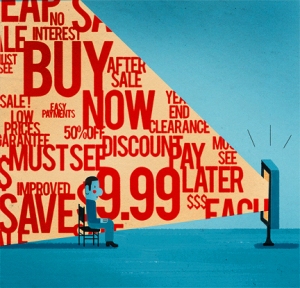
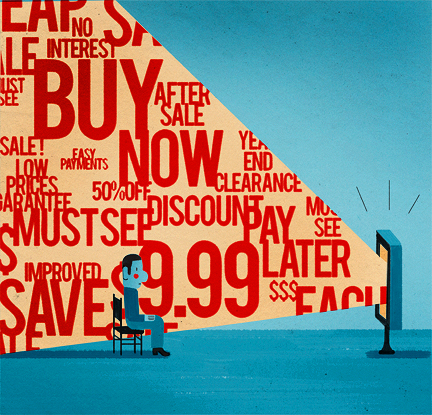
MALL1-facebook     One of the most harrowing challenges of modern life in the West is navigating through the massive desert of mindless, materialistic consumerism. It is within this landscape that a soul can become lost and drenched in despair. From the endless stream of vacant eyed wraiths that glide down catwalks, to the pervasive advertising that never ceases to demean the values of empathy and compassion and hollow out any meaning associated with human connection, to the entertainment industry which revels in the depths of cruelty it can sink to, the onslaught on the psyche is both constant and merciless.

consumerism Picture Source Green is SexyThe American shopping mall is a reflection of this nightmare of ravenous cupidity and a message of stark disenfranchisement to the ever growing underclass. Its glossy finishes and plastic displays erect a wall of defense against anything remotely human or sacred. It entices the youngest of our society with the promise of fulfillment and social status through the acquisition of objects, the alteration of their faces and bodies, and the tacit abandonment of any connection with the natural world and all the beings that inhabit it. Concrete and glass monoliths of corporatism drive home the deepest sense of alienation and desolation by design. It is a fantasy land of the cruelest fakery, replacing the lively, chaotic and thoroughly interactive market place with the impersonal, the absurd, and the surreal. Exported around the world to some of the most impoverished nations on the planet, it is a unique, exclusionary and effective form of imperialism.

The Big Box stores, in contrast, make no pretense to that kind of romanticism. They sit shamelessly on seas of pavement in wetlands, lush meadows or downed forests, scraped and drained clean of their original life and inhabitants. They are a reflection of what America has become; a stark and depersonalized vision of depravity within the setting of a dying ecosystem. Their plastic and glossy objects fill giant bins as they fill our oceans and river systems. Their clothing racks conceal the stain of sweat shop slavery. They exude the callousness of a factory farm, encouraging and cheering on aggression, prodding livestock into its maw of spiraled decadence. This is the architecture of banal cruelty and indifference.
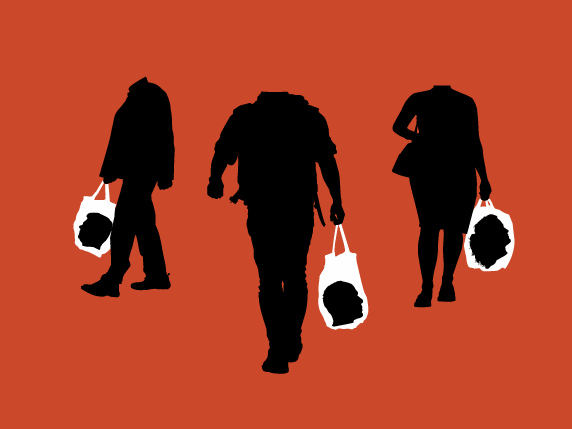
mindless consumerism Philosophers Stone

Understanding this landscape it should not come as a surprise that stories about vampires and zombies dominate contemporary, popular entertainment. These themes perfectly mimic the corporate capitalist economic model which glamorizes and celebrates the ghoulish and the macabre, while it rapaciously feeds upon the most vulnerable and powerless members of society for profit. The monsters in these tales are almost always fascinating, beautiful or so powerful as to be envied, while their victims are generally bereft of any identity at all. And this is exactly the way the wealthy elite want ordinary people to think of themselves. This ideology may contribute to the emergence of the mass shooter phenomenon, but it also underlies the mass acceptance of the police state model which relies on the violence of the state to reinforce the boundaries of class, and to bolster the mythology of the superiority of the powerful and wealthy.

The map out of this nightmare is often masked by the empty promises of having more stuff, altering ones outer appearance or conforming to socially acceptable shallowness. Advertising, social media and the political class, which sanctify the zombification of modern society, demand we attune and respond to their dictates and Siren song, lest we be banished from the corporate kingdom. Of course exclusion is terrifying to the elite and serf alike. We have been trained to avert our eyes from the homeless, the working poor and the far flung slaves to our insatiable consuming. If we dare look we might see our collective future. We might see exactly how our separateness is a grand deceit, a scam. And in doing so we might indeed shun otherness for the embrace of actual human beings. Free or revolutionary thought cannot be tolerated in a capitalist corporatocracy where denial, jingoism and conformity are embedded in the liturgy.

Black Friday Shoppers

But we are coming to the end of the illusion, for better and for worse, sooner rather than later. The planet’s ecosystems are wailing from the misery our way of life has inflicted upon them. They are dying. And the humanity that has been enslaved to continue this insanity are beginning to recognize their chains. Mass extinction is fast closing in on us.  All of us will be forced to face this reality whether we want to or not. An industrial, consumerist society, based upon an endless growth economic model on a planet with finite resources, is impossible to sustain. It will eventually collapse.

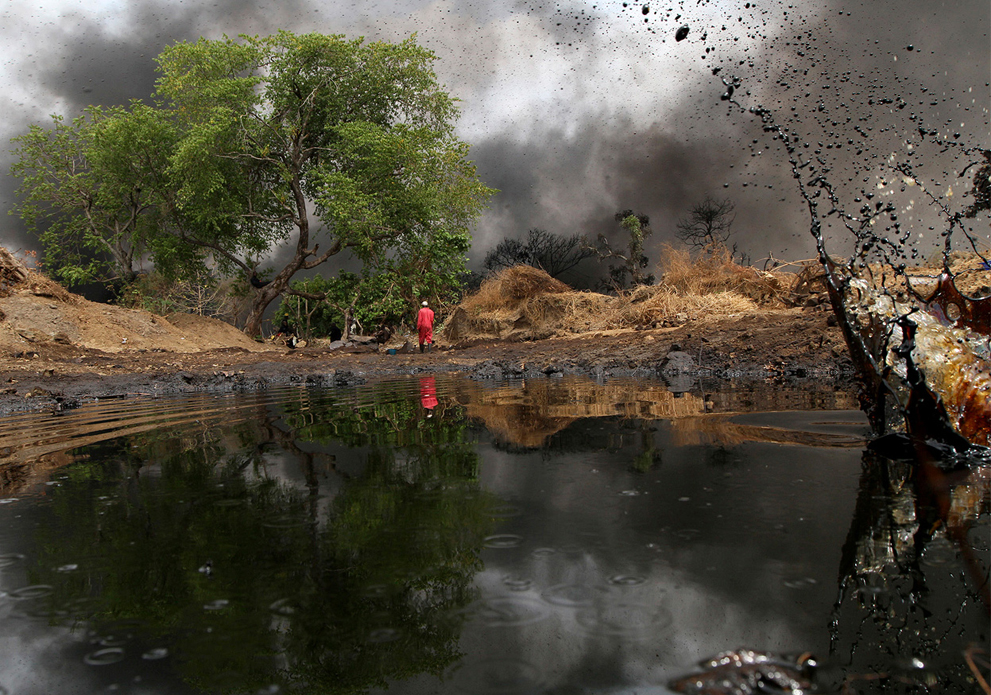
Shell oil pollution Niger Delta Agence France Presse

Camel dead from plastic consumption

Polar bear on dwindling Arctic ice sheet PA

If there is map out of the cemetery that we have long dug for countless species by our selfish indulgences and out of the wreckage of civilization, that irony of all ironies, it may very well lie in the chance, however remote, that some of us will emerge from the ruins long enough to tell a different story of who we are.  Perhaps we will have enough time to honor all that we had and mourn all that was lost.  And perhaps future generations, if there are any who survive, will not hate us too much for the brutality we tolerated and the ecocide we caused.

Perhaps.

Kenn Orphan  2014

Photo Credits:
-An abandoned shopping mall in Mid-west America and is credited to Seph Lawless, courtesy of TWC (The Weather Channel)

-Courtesy of the Philosopher’s Stone

-Black Friday shoppers and is stock footage (Techno Buffalo)

-Devastation in the Niger Delta from oil pollution. Agence France Presse.

-Camel dead from consuming plastic waste.  Plastic Pollution Coalition

-A polar bear on a ever dwindling Arctic ice sheet/PA

A Real Human Being

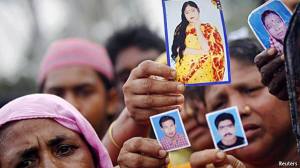
bangladeshOver one year ago the Rana Plaza sweatshop in Bangladesh collapsed killing over 1,100 people and injuring thousands more. Modern sweatshops are to globalization as cotton fields were to slavery in the American South. They represent one of the most brutal forms of human bondage, where life is worth only pennies while profits for retailers is in the hundreds of billions of dollars. It is one of the best examples of economic tyranny in action.

After the disaster at Rana Plaza, Western retailers were called to task for their complicity in the perpetuation of these factories of death. Corporations such as The Gap and WalMart continue to refuse signing the Accord on Fire and Building Safety in Bangladesh as it would hold them legally responsible for their part in using clothing manufacturers that put their workers in harms way.

Most of us in the West have no sense of the pain and sorrow stitched into every garment that we wear. We don’t have to see the faces of children and women forced to work 16 hour days and receive wages that barely pay for a pot of rice. But every thread that drapes American and European hangers that is from one of these places hides a story of pain, and exploitation and struggle. Every shirt, or dress, or pair of jeans has a real human being behind its production. A real human being that is no less deserving of basic safety, a living wage, fair representation, reasonable hours, and a decent life.

Corporations and mega-retailers would like us to ignore their plight. It would like us to look away from their faces. It would like us to forget that we are them, and they are us.

Instead, we honor the victims of this unnecessary tragedy. But we also honor our shared humanity that demands justice in the face utter depravity and merciless exploitation.

Kenn Orphan  2014

(Photo is of families of victims of the Rana Plaza catastrophe and is courtesy of Reuters)