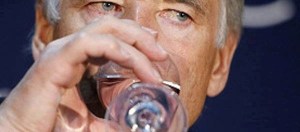
The World Bank, perhaps the best example of a “front man” for today’s corporate, capitalistic, economic policies, eagerly promotes and defends the gospel of neoliberal capitalism, which Wikipedia defines as: “privatization, fiscal austerity, deregulation, free trade, and reductions in government spending in order to enhance the role of the private sector in the economy.” But however it is spun, it is essentially organized crime with an official seal. It takes poor nations, previously colonized, exploited, and enslaved, and says “here, take this impossible loan to pull yourselves out of the impoverishment we imposed on you for centuries, and in return we will allow multinational corporations to take your resources and enslave your people in low wage, sweat shops.”
And water is its next project.
Echoing mission statements of multi-national, mega-corporations, it recently declared that water should be privatized. In other words: owned. Shelter, food, air and water are essential to life. Shelter and food have already been privatized around the planet. Air is still out of reach although they are polluting it as fast as the other three. But water is what they are eying now.
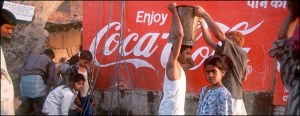
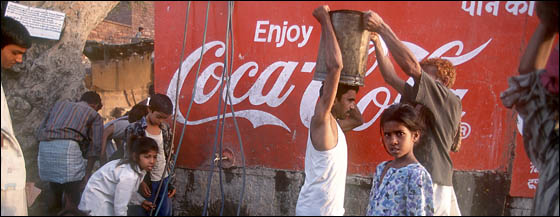
(Coca Cola extracts huge quantities of water in India, often robbing poor communities of their only access. Photo credit: Oxfam)
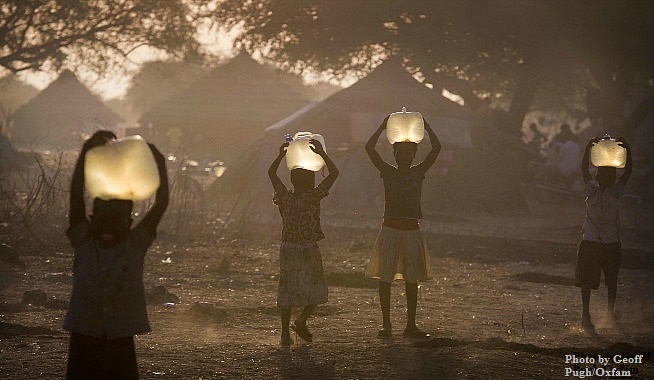
Water sources around the world are being consumed and polluted by industry at a staggering rate, and communities that suffer from this exploitation seldom have any legal recourse against the offending companies. From Michigan to India to Africa, huge corporations like Coca~Cola and Nestle have bought up aquifers, wells and springs, and have sold back the water they extract in huge quantities to already impoverished communities at a highly inflated rate.
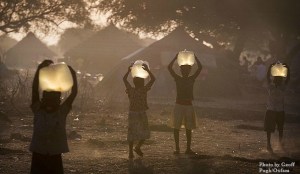
(Boys transport water jugs in South Sudan. Photo credit: Geoff Pugh/Oxfam)
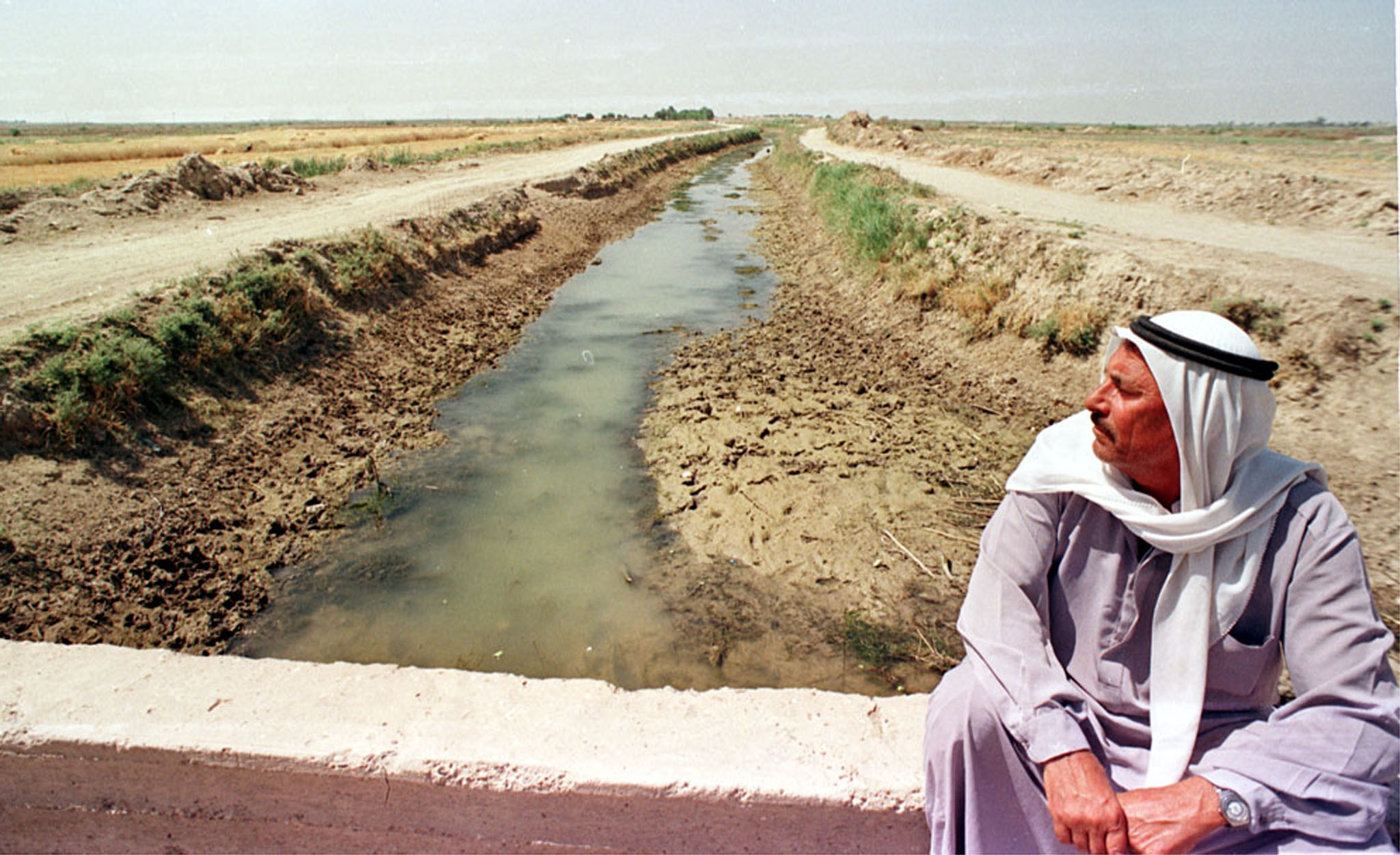
The impact of water, or the lack of it, often spawns or exacerbate conflicts. Syria has suffered for years with an intractable drought; and many attribute the civil war that has claimed thousands of lives to this crisis. If water continues to be privatized we will undoubtedly see this tragedy repeated the world over as poor or disenfranchised populations are forced to relocate to urban areas or neighboring countries. Add to this the other dire ramifications of climate change, and the dust bowl conditions it induces, and the privatization of water becomes just one more banal cruelty inflicted on the poor.
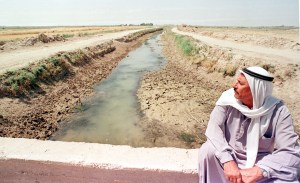
(an Iraqi farmer sits by a trickling stream in Dayala province. Photo:Reuters)
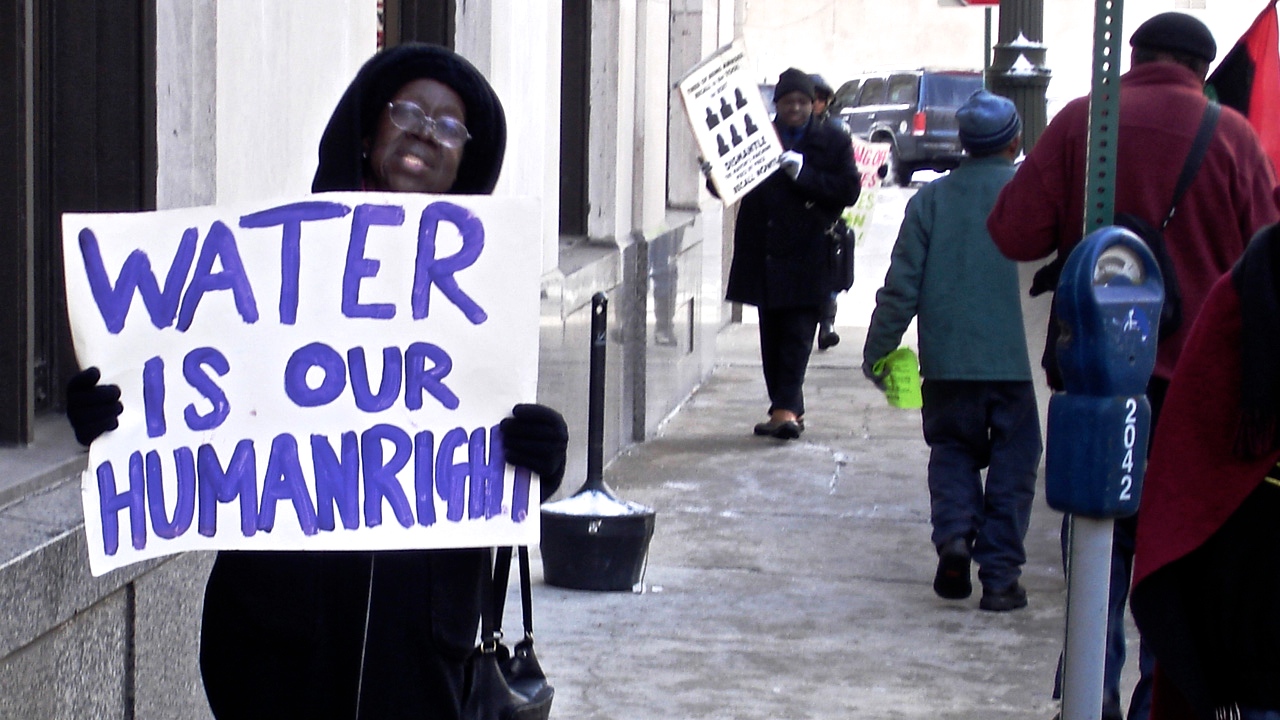
Recent events in Detroit attest to the reality that this battle for human life and dignity is not merely a “third world problem.” Water rights are being assaulted everywhere. In this once thriving American city, it has become a tool of social control. The city has “shut-off” water to thousands of residents due to their inability to afford the exorbitant cost. It has effectively informed the public that it’s “right to life” is only viable insofar as their ability to pay for it. The part that racism plays in all of this is troubling too, as most of the communities targeted are disproportionately people of color. This is all unfolding in the richest nation on the planet; yet the situation has deteriorated so much that the United Nations has been called in to investigate.
The world over, ruthless profiteers have been trying to convince the public that it is natural to attach a dollar sign to everything, including water. For example the former CEO and now-Chairman, Peter Brabeck-Letmathe, of Nestle was quoted as saying “access to water is not a public right.” Under their scheme, they aim to own all rights to it, and only the wealthiest will be able to pay the extortionate cost assigned to it.
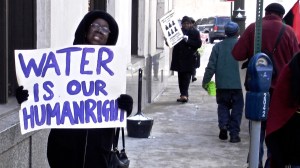
(A protestor in Detroit, Michigan. Photo credit: Occupy.com)
Whether it is Detroit, Michigan or Nagpur, India, access to clean water should be understood as a fundamental human right. But, like so many other rights, it is being systematically stripped away from us by corporations, industry and their henchmen at the World Bank. All things considered there is one certainty, this issue is destined to become a defining feature of the 21st century, and, perhaps, the most important struggle against this new age of tyranny.
Kenn Orphan 2014
(Photo at top: Peter Brabeck-Letmathe, Nestle. Credit: AP)
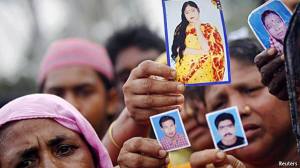 Over one year ago the Rana Plaza sweatshop in Bangladesh collapsed killing over 1,100 people and injuring thousands more. Modern sweatshops are to globalization as cotton fields were to slavery in the American South. They represent one of the most brutal forms of human bondage, where life is worth only pennies while profits for retailers is in the hundreds of billions of dollars. It is one of the best examples of economic tyranny in action.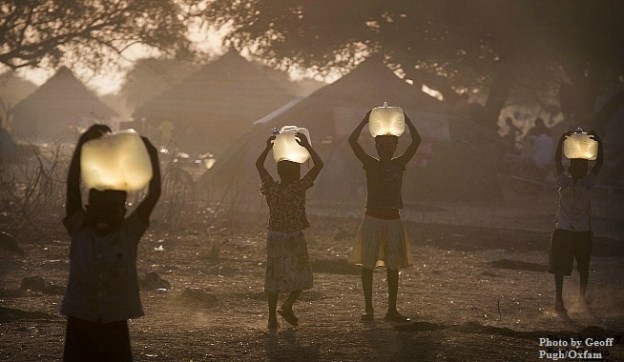
 Kenn Maurice Orfanos (Orphan)