Tag Archives: racism

I Sat Next to Brigitte Bardot Once on a Bus in Nice

Okay, no. I actually did NOT sit next to the late French actress, Brigette Bardot. But it very easily could have been her.

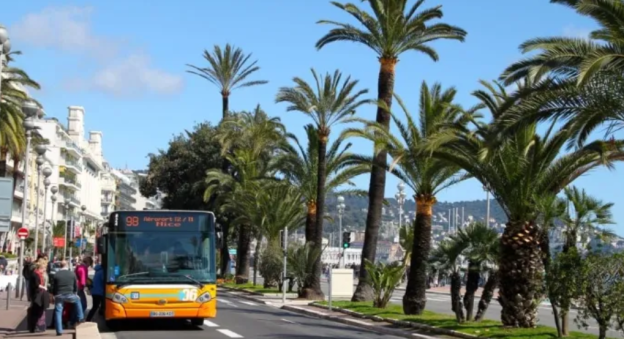
I was there on holiday with a group which included my partner, family and friends. After an excursion we took to a monastery in the back country, we decided to take a local bus back down to the city. As it was crowded, I took a seat in the back and I happened to sit next to an elegant, elderly white French lady.

In my mind’s memory, she resembled Lauren Bacall as she appeared in her late 70’s. Stylish, poised, cultured and monied, the latter being something of the distant past since she was condemned to taking a bus with all of us rubes and sunblock slathered tourists.

She spoke impeccable French. And, for some reason, she took a shine to me. Even after I told her in my egregious French that I was not fluent in any way, she began a conversation with me that spanned the hour and a half ride down through the lush hills of the south of France.

She spoke of her childhood. The post-war struggles and sacrifices. Something about living in a one room flat in Marseille with either her lover or a really close friend. Honestly, I was having great difficulty translating the details. I covered for that by giving the wry smile many French often do as if to say we know what you are saying. Essentially, “ah, mais oui.”

As the bus neared Nice, more passengers got on and off respectively. And many of them, based on clothing and language, seemed to be of either an Asian, Sub-Saharan African or Middle-Eastern culture. And this is when I noticed the change. The lovely white French lady sitting next to me, the same one who had been telling me stories about her life in France, changed. Her demeanor. Her cadence. Her eyes.

Even with my poor French, I could hear the disdain. These people were “not French” according to her. And they were allegedly ruining French culture. “France devient un mauvais pays à cause d’eux,” or something like that. And I knew where this conversation was going.

For the remaining journey on that bus I had to listen to her mock and dehumanize any non-white passenger that came aboard. As she spoke, I remembered how the French brutalized Algeria. How thousands were tortured and killed during the occupation. French colonialism has often been romanticized to a degree unlike British and other European colonial projects. But it was no less horrendous than any of them. And in her I saw the face of French imperialism. Pretty, elegant, condescending and cruel.

When we finally reached our destination, she bid me au revoir and I stepped out onto the crowded promenade along the Mediterranean in Nice. I was grateful that journey was finally over. But I have thought about her in recent days since hearing about the death of the French actress, Brigette Bardot.

Bardot was known for her animal advocacy and activism. But she is also infamous for her loathsome fascist politics. She was friends with Jean-Marie Le Pen and other far-right nationalists. In fact, her husband was one of Le Pen’s top advisors. And she was convicted and fined at least six times for inciting racial hatred. In addition to her Islamophobia and racism, Bardot dehumanized queer people, calling them “fairground freaks,” and mocked the women who came forward to expose the abuse they experienced by powerful men in the Hollywood film industry.

Unlike the lady I sat next to on that bus in Nice, Bardot had enormous influence. And she used that influence every chance she could to peddle in social hatred. Now that she is dead, she is being lionized in social media as a champion of sexual liberation and a tireless advocate for animal rights. In much the same way as Charlie Kirk, her own legacy is being sanitized by those who choose to see her as “complicated” rather than an odious person who dehumanized marginalized people throughout her long life.

None of this is to say that we should expect anyone to be flawless. Far from it. We are all human and we all say or do things that harm others, whether intentionally or not. But this is about lifelong patterns. About making it a point (whether in books or public engagement) to double down on social hatred, racism, bigotry and fascist ideology. There is a difference between being human and making your life a billboard of hatred.

I didn’t sit next to Brigitte Bardot on that bus in Nice several years ago. But she could have easily been her based solely on the bigotry, the racism and the poised French elegance that thinly masked it all.

Kenn Orfanos, January 2026

Trump is a Vicious Cult Leader

For the past couple weeks, Donald Trump has been stirring up hatred for the Somali community with lies and fearmongering. And the result has been a surge in white supremacism.

This is what fascist regimes do best. While they are totally unequipped to govern, they use the rhetoric of scapegoating and demonization to distract from their complete ineptitude. It becomes the only policymaking that they are capable of.

As the American economy continues to decline and the US becomes more isolated, Trump and his regime are becoming more and more unhinged in their cruelty toward the most vulnerable and marginalized. And since fascism demands cultlike devotion, this cruelty runs through the entire society like a rancid effluence, poisoning everything in its path.

The American project was built upon racism, one which justified genocide, slavery and apartheid. And it has never reckoned with this in any meaningful way. So, the obvious outcome has been the current president.

Trump isn’t an anomaly, he is a prime example of America with its mask of civility finally ripped off. A narcissist who is convinced of his greatness, much like the many Americans who have been bamboozled into thinking they live in the greatest country on earth. An arrogant ignorance impervious to the reality of having no universal healthcare, few worker protections, crushing debt, poor education, crumbling infrastructure, rampant gun violence and rapidly rising economic inequality.

So, what can we expect in the coming months or even years? Trump is a vicious cult leader who is oblivious to the stench of his own rot. Even as his health (both physical and mental) declines, he cannot see through the elaborate web of lies he has woven around him. And the sycophants in his court will never tell the emperor he is has no clothes.

Cults rarely dissipate peacefully. In almost every case, they end up devolving into paranoia, conspiracy theories, delusion and violence as their blind obeisance to power backfires and the shoddy worldview they invested everything in breaks down under the weight of its own incompetence and madness.

Sometimes cults merely self destruct. But more often than not, they lash out on anyone within their orbit, with the most vulnerable being the first victims. Either way, what comes next will not be easy to endure, especially for communities like the Somali.

Kenn Orfanos, December 2025

The Legacy of Emmett Till

“Emmett Till’s death was an extreme example of the logic of America’s national racial caste system. To look beneath the surface of these facts is to ask ourselves what our relationship is today to the legacies of that caste system – legacies that still end the lives of young African Americans for no reason other than the color of their American skin and the content of our national character. Recall that Faulkner, asked to comment on the Till case when he was sober, responded, ‘If we in America have reached the point in our desperate culture where we must murder children, no matter for what reason or what color, we don’t deserve to survive and probably won’t.’ Ask yourself whether America’s predicament is really so different now.” – Timothy B. Tyson,  The Blood of Emmett Till

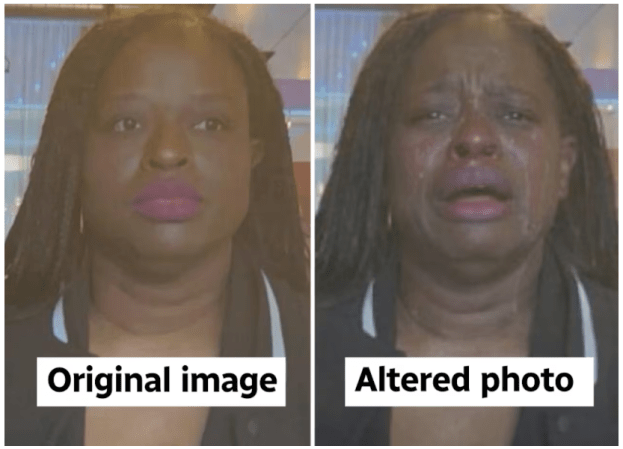
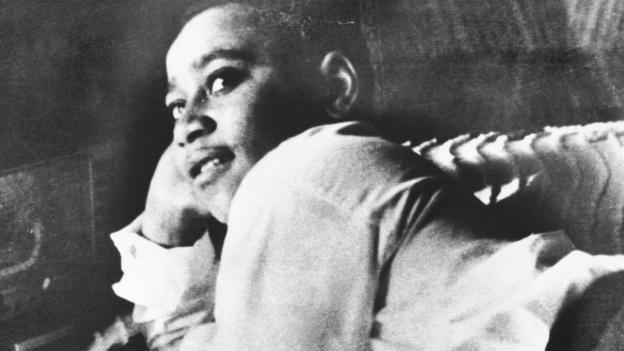
Recently in Brooklyn, New York, a white woman, Teresa Klein, accused a 9 year old black boy of “groping” her in a deli. She called the police, but surveillance video proved this claim to be false. The boy, Jeremiah Harvey, was left shattered and in tears by the incident. I couldn’t help but be reminded of another instance like this that proved far more tragic. In 1955, a false accusation of sexual assault led to the brutal murder of Emmett Till, a 14 year old black boy in Mississippi.


It was the Jim Crow south and his accuser was a white woman who claimed Emmett whistled at her, grabbed her hand, made sexual innuendos and shouted obscenities. The boy had a speech impediment, and he was undoubtedly schooled by his family on how to “behave” in the oppressively hostile environment of a racist white America. It is highly doubtful he would have even approached this woman. But it was of no consequence. He was dragged from his bed by a mob of white men, tortured, mutilated, tied with barbed wire and thrown over a bridge. His tragically horrendous fate was linked to hundreds of years of racist oppression. But this was just a little over 60 years ago and his accuser is still alive.
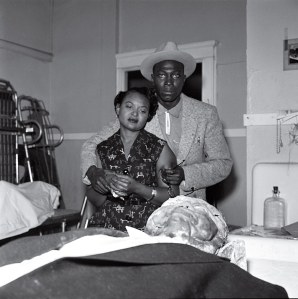
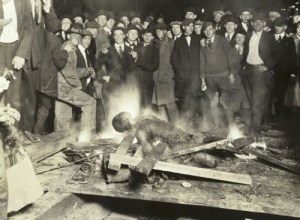
Emmet Till was the victim of a culture of entrenched racist cruelty. The mob that tortured, murdered and then mutilated his body had no problem viewing black children as adults and intrinsically guilty of being a sexual or existential threat to the dominant white society. Thousands of black, brown and indigenous people, and some whites, were hanged or burned alive at events that were publicized, photographed and well attended. Postcards and popcorn were even sold to the ghoulish onlookers who sometimes took home body parts as souvenirs. It is worth noting that the last officially documented lynching took place in 1981 in Alabama, not even 40 years ago. But it could be said that the brutal murder of James Byrd, Jr. in 1998 qualified as a lynching, and there are several other modern examples.


The lynch mobs of the post-Civil War era in the US were a form of organized terror, not too unlike the genocidal gangs of colonial settlers who exterminated or ethnically cleansed much America’s indigenous population. But the phenomenon differed in that most cases involved a white woman accusing a black male of sexual assault or rape. For centuries racial stereotypes permeated the American consciousness. But following Reconstruction, ever more insidious myths were circulated among a demoralized white majority. They conditioned an entire society to view black people as devious and savage. Black males, in particular, were cast as threats to the so-called purity of white women. This was exemplified in the notorious film “Birth of a Nation” which was shown in Woodrow Wilson’s White House to much praise. The “brute” moniker was a pejorative term that dehumanized black men as threats and was common over a century ago. It has evolved into the use of the word “thug.”
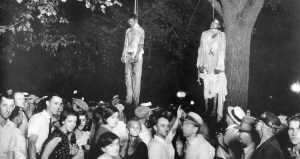
Today the legacy of America’s racist beginnings can be seen in its institutions that carry out a modern day version of lynching in the form of harassment, incarceration and police brutality. Children like Tamir Rice are among the victims of a system that justifies this continued violence in the name of public safety. It should come as no surprise, then, that Teresa Klein called the police after her spurious claim in a New York deli. She was confident of her social position and, after all, why shouldn’t she be? We have seen several instances of this recently in viral videos capturing white people claiming to be victims while making frantic 911 calls on others for the crime of existing while black. Seldom, if ever, do these people face real consequences save being called out on social media, despite the fact that they are literally putting more black or brown bodies in harms way for nothing. Consciously or not, these individuals are maintaining a caste system built through violence that has existed long before the formation of the republic itself.


Noting that American policing was, at least in part, rooted in the legacy of slave patrols, it is worth reflecting on how it has evolved since. Under a capitalist system the police function primarily as the protectors of private property. As the dispossession of Native Americans from their ancestral lands and the African Slave Trade were both key factors in the economic growth of the United States, it is important to understand that throughout its 242 year history, and long before, the ruling class in America enshrined white supremacy into its governance. Prior to 1856 only landowning, white men could vote, approximately 6% of the population at the time. So it is easy to understand how this history has informed the culture to this day.


Today’s spate of viral videos showing, in many cases, unhinged white fragility at the mere existence of free black people in their presence is a reflection of a broader and generalized angst over a perceived loss of power, privilege and social control. And with a president who has employed racist canards, demonized immigrants, transgender people and Muslims, and has routinely dehumanized people of color, it isn’t too difficult to understand how this persistent strain within American society has been emboldened once again.


Emmett Till still haunts the American consciousness. His torn face is emblematic of the racist strain that still runs deep in the culture. The photographs of his mutilated body show a boy chewed up by a violent culture of entrenched privilege, class repression and virulent social hatred. He was photographed in the coffin that he was laid to rest in at his mother’s request, and we should be forever grateful to her for what must have been the most difficult decision of her life. Because with that one act, she showed the country what it truly was.


Kenn Orphan  24, October 2018

On Identity Politics and the Struggle Against Capitalism

“I am human, and I think nothing of which is human is alien to me.” ~ Publius Terentius Afer, Roman playwright  (195/185 – c. 159 BC)
Recently, I’ve seen the topic of identity politics coming up in certain forums. Without a doubt this is commonly misunderstood concept that has been deliberately manipulated for political reasons. But the so-called “alt-right” (see far right, white supremacists) have seized on this confusion with a vengeance. Even some on the left have decried its influence because to them it serves as a distraction and undermines the importance of fighting classist exploitation under late stage capitalism. It should not come as a surprise that many of them are white, heterosexual men with Christian European ancestry who have never experienced oppression, systemic discrimination or state violence based on their skin pigment, gender, religious expression, sexual orientation, disability, language or ethnicity. As a white man myself I concede that this is indeed a luxury most of the planet does not enjoy.
          Human beings are not a mono-crop. We have personal and shared identities based on how we look, speak, act, who we love, how we worship (if we choose to worship) and from our experiences of being different from the dominant group in our society. And it is undeniable that many are mercilessly persecuted for those differences. While it is undoubtedly true that cynical political operatives of the American Democratic Party use identity to curry support and distract from the oppressive economic structure of capitalism, it does not make the reality of white supremacy, patriarchy or oppression based solely upon identity, any less true.
          Racism and sexism, for example, are existential realities faced by the vast majority of humans on the planet every single day. Women endure the most violence of any group and while it must be understood that there is no such thing as “race” in a biological sense, there is indeed such a thing as racism. And both forms of oppression work in similar ways, through violence, loss of status, and coercion or the threat of these things. These forms of oppression predate capitalism, but as a descendant of colonialism it makes them an easy fit for an economic model which places human beings (and other species for that matter) into categories of hierarchy and class for easy exploitation. So it is undeniable that since capitalism is the dominant economic and political global order it is also the primary engine for persecution, discrimination and even genocide against the oppressed in the world today.
           It should therefore go without saying that capitalism is at the root of the problem, but even given this truth or that identity is cynically manipulated by certain political parties, it does not make the reality of oppression based upon ones identity any less real or existentially threatening. I believe anarchists, radicals and socialists offer the best solution to these monstrous problems, but not if they dismiss, ridicule or deny the existence of identity within the human species or the brutal persecution people face because of them. Recognizing ones own privilege and extending solidarity to oppressed, marginalized or disenfranchised people is not a distraction from the struggle against capitalism. On the contrary. It offers us the best bridge toward societal transformation that no stale ideology could even dream of.
Kenn Orphan  2017
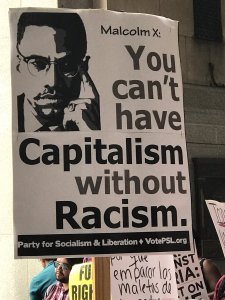
Title image is “Capitalism and Racism” by Paul Domenick.

The Scream of Canadian Colonialism

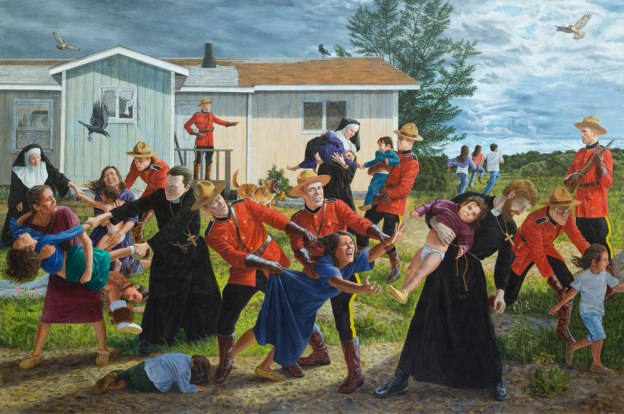
           The title of Kent Monkman’s painting, “The Scream,” is appropriate to the experiences of First Nations people across Canada who continue to suffer from ethnic cleansing, the erasure of cultural identity, and ecological and economic disenfranchisement. The painting depicts the forced removal and displacement of indigenous children from their homes by the Church with the assistance of the federal government. For decades First Nations children were abducted from their homes and placed in residential schools where they were compelled to reject their culture and language and suffered horrific physical, sexual and emotional abuse. Monkman, who is of Irish and Cree ancestry, was able to capture this horror in living colour on canvas. He said of this and related works:
          “Canada’s 150 years old—what does that mean for the First People? When I thought about it, I thought it includes the worst period, because it goes all the way back to the signing of the treaties, the beginning of the reserve system, this legacy of incarceration, residential schools, sickness, the removal of children in the ’60s, missing and murdered women.”

            The tragic history of colonialism in Canada is, arguably, a vastly under studied and addressed atrocity. But its legacy endures to this day even under the leadership of Prime Minister Justin Trudeau who has been slow to address abysmal access to clean drinking water, crushing poverty, suicide, substance abuse and violence against Aboriginal girls and women. His government has also greenlighted ecologically destructive pipeline projects over indigenous lands. Kent Monkman’s paintings implore us to shine a light of truth on this veiled history, understanding that if we do not do this the crime of colonialism will only continue.

Kenn Orphan  2017

For more information on Kent Monkman’s paintings please visit his web page:  http://www.kentmonkman.com/

Emblems of Supremacy

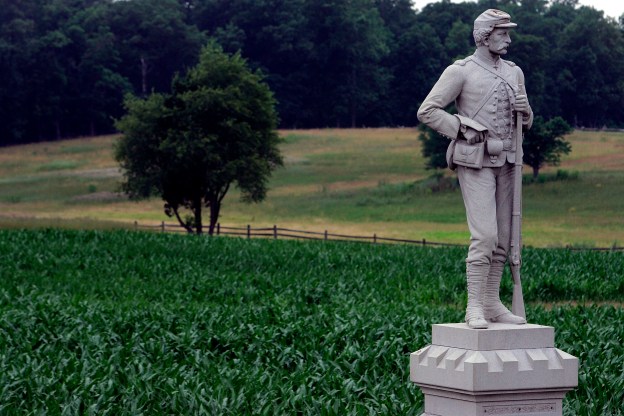
The controversy over Confederate war memorials and statues that has ignited protests and a resurgence of violent white nationalism cannot be understood outside of the historical context in which these and other monuments in the United States were erected. Many white Americans are unaware that these were the consequence of coordinated efforts to enshrine white supremacy. They do not exist to preserve history or heritage, but to ensconce the notion of white dominance over previously enslaved or ethnically cleansed groups of people. One way this was achieved was in placing them in gentrified neighbourhoods which displaced local black communities or desecrating the sacred places of native peoples forced off their ancestral lands.

Surges in their construction were seen in the 1910s through 1930s following Reconstruction and a rise of the Ku Klux Klan, and in the 1950s and 60s as a racist answer to the Civil Rights Era. Concurrent with the dedication of many Confederate war memorials were the horrors of lynching and Jim Crow. And there was a coordinated effort to whitewash history in these eras as well. Examples of this include the notoriously racist film “Birth of a Nation” and the puff piece “Gone with the Wind” which sought to cast the Antebellum south in a noble light.

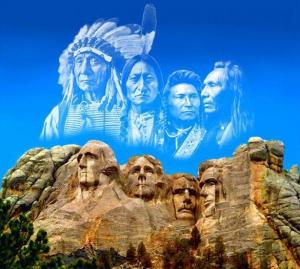
In truth, most statues and monuments in the United States are emblems of white supremacy. Even the much beloved Mount Rushmore is little more than a testament to ethnic cleansing. On it the images of four US presidents were carved into a sacred mountain for the Lakota by Gutzon Borglum, a member of the Ku Klux Klan, from 1927 to 1941. The choice of presidents was no accidental message either. As Ron Way, a former official with the Department of the Interior and National Park Service, put it:


“George Washington and Thomas Jefferson owned slaves. Abraham Lincoln famously emancipated slaves, but he supported eradicating Indian tribes from western lands and approved America’s largest-ever mass execution, the hanging of 38 Dakota in Mankato for their alleged crimes in the 1862 war along the Minnesota River. Teddy Roosevelt, in his “The Winning of the West,” wrote: “I don’t go so far as to think that the only good Indians are dead Indians, but I believe nine out of every ten are … .””


Many of the monuments we see festooning city parks, on university lawns or looming over government buildings were designed to obscure the people’s record, not enhance our understanding of history. When the Spanish built cathedrals over razed Aztec, Mayan or Inca temples and replaced imagery of native history with statues of Catholic saints and European “explorers” they were sending a clear message of dominance and demoralization to the indigenous population. They understood the ruthless power of erasing a people’s history. Similar actions have been taken all around the world where one group dominates another.

And the same can be said of the many statues that elevate racists, slave owners and military generals to a place of honour dotting the American landscape. They are not remembrances of fallen soldiers, most of whom did not own slaves and were poor, but tributes to the powerful who launched wars and military campaigns of conquest to maintain their ill gotten privilege from coerced labour. They are not a celebration of ethnic heritage, but painful symbols and daily reminders of the brutal oppression people of colour have endured and continue to face under a tenacious, violent and persistent societal racism.


Removing statues from parks or university plazas is not burying history, not by a long shot.  It is in fact correcting an egregious and gross misrepresentation of it. The best these emblems of supremacy deserve is placement in museums of tolerance or history where everyone can discuss and critique their impact on society today. As for Mount Rushmore, returning the entire mountain to its rightful owners and letting them decide can be the only just solution.

Kenn Orphan 2017

The Only Answer to Fascism

What happened in Charlottesville this past weekend was more about racist fascism than an alienated white “under class.”  To say such is a smack in the face to the millions of working class whites who struggle side by side with their black and brown counterparts everyday.  They raise each other’s children, share each other’s health costs, weep at each other’s weddings and funerals, all in the fight to survive in capitalism’s cruel game of manufactured competition.

Many of the racists who came to Charlottesville drove in on SUVs from other states wearing Louis Vuitton sunglasses.  They are weak kneed reactionaries emboldened by tiki torches and idiotic speeches by rockstar bigots like Milo Yiannopolis, afraid of losing the ill gotten privilege they enjoy thanks to their skin hue, sexual orientation, gender and religion.  It is true many are saying class warfare had something to do with this and they would be right; but equating the millions of the working class with this kind of raw racism and social hatred is inaccurate and beyond insulting.  And they deserve better than that.
As for the fascism that was on display in that small, college town in Virginia there can be only one answer.  There is no compromise to be made with fascism.  No common ground can be found.  No bridge built.  No excuse made.  For fascism is at its core an ideology of death.  And if it is allowed to flourish, if it is permitted to prevail, it will most assuredly spell out a chapter of misery that will end with our epitaph.  The only answer is a resounding NO!

Kenn Orphan  2017

Dedicated to the courage and memory of Heather Heyer who paid the ultimate price for standing up against racism, social hatred and fascism.  May she rest in peace.

The Trail of Tears and the Celebration of a White Supremacist

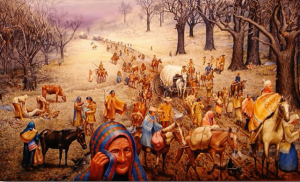
“Trail of Tears”, oil on panel, 1995, by American artist Max D. Standley (1943-2013).
          When Max D. Standley painted this epic painting he said of it: “There was considerable research involved in this, truly the saddest painting I have ever done.”  One can understand why.  It captures a sorrow reminiscent of all similar horrors in history.  It is at once emblematic of the Native American genocide and universal in the plight of all oppressed or marginalized people throughout humanity’s relatively short story.
          This work depicts the ethnic cleansing of Native Americans, including the Cherokee, Muscogee, Seminole, Chickasaw, and Choctaw Nations as well as some black slaves and freedmen, by the United States government from their ancestral lands, beginning with the “Indian Removal Act” passed by the US congress in 1830.  The act was enthusiastically championed and signed by President Andrew Jackson.  At its end nearly 46,000 people were forcibly relocated.
          The Trail of Tears refers specifically to the last act of removal involving the Cherokee Nation, who were expelled from their lands after gold was discovered on them by settlers.  Cherokee society had thrived for centuries in North America in primarily what is now the state of Georgia.  The Cherokee silversmith Sequoyah developed a written alphabet.  They had established schools, built elaborate settlements and by the 19th century printed a newspaper in the Cherokee language.  There was valiant resistance to this expulsion from all the Native American communities and even among Christian missionaries and some white politicians like Daniel Webster and Davy Crockett.  But Jackson and American colonialism prevailed and the Cherokee were forced off their land to make way for white settlers of European ancestry.
          Nearly 15,000 Cherokee were forced to make a perilous journey through the wilderness, with few provisions and under freezing conditions.   They had to leave precious belongings behind, wealth and cultural items later claimed by white settlers.  It is estimated that at least 4000 perished from disease, exposure or malnutrition.
          This dreadful historic event is even more important to remember today.  In the past few months US President Donald Trump has gone out of his way extolling the late Andrew Jackson, going so far as to spend the night at his plantation the Hermitage, to commemorate what would have been his 250th birthday.  Trump said of him: “It was during the revolution that Jackson first confronted and defied an arrogant elite. Does that sound familiar to you?” he asked a crowd of his fans.  “Oh, I know the feeling, Andrew.”   Trump’s version of history is limited at best.  Jackson did defy the aristocratic elite of his time.  But unlike Trump he came from rather humble beginnings relatively speaking.  He was not the heir of a multi-million dollar fortune.  But all this belies what Trump and Jackson share.  Like Trump, Jackson aspired only to rule as one of the elitists that he so deeply loathed, in that he acquired his wealth and power through much the same way, via exploitation, cruelty and greed.   He simultaneously despised the aristocracy and was a part of it.
          Jackson owned hundreds of slaves, not uncommon for white, male landowners of his time; but enforced a brutal system of loyalty through violent punishment.  He also favoured war and militarism over diplomacy and cooperation, invading Spanish Florida in an effort to re-capture runaway slaves and expel the Seminoles from their ancestral land.   And he committed what would today be considered war crimes, encouraging militias to kill not only Native American warriors, but to exterminate women and children as well.   He was the founder of the modern day Democratic Party (1828) demonstrating that war mongering and white supremacy are bipartisan values.  Outside of the supremacist myths of “American Exceptionalism” and “Manifest Destiny” Jackson deserves to be remembered only as a despot who championed ethnic cleansing and passionately defended and benefited from the institution of slavery.

          After these first 100 days one can see why Trump revels in his legacy.  Like Jackson, Trump sees himself as a populist defending beleaguered white working men against hordes of those whom they falsely believe are the source of all their misery and demoralization.  Trump purged many government agencies of staffers just like Jackson did, only to replace them with loyal supporters.  He promotes a worldview that celebrates hypermasculine militarism, even going so far as to advocate killing the families of suspected terrorists.   His reckless penchant for war in place of diplomacy is in alignment with Jackson’s legendary blood lust.  He has showed no hesitation in robbing Native Americans of even more of their land to create “jobs,” a code word for the empowerment of white men exclusively.


          The Trail of Tears is Jackson’s most damning legacy and one of countless cruel chapters of colonialism which many would like forgotten.   Celebrating one of its main architects only mocks the dead and displaced, and dishonours their descendants.   But it does provide us one crucial insight.   It shows us how Donald Trump sees the world and its people.
Kenn Orphan  2017

Resistance in an Age of Absurdity

“One of the saddest lessons of history is this: If we’ve been bamboozled long enough, we tend to reject any evidence of the bamboozle. We’re no longer interested in finding out the truth. The bamboozle has captured us. It’s simply too painful to acknowledge, even to ourselves, that we’ve been taken. Once you give a charlatan power over you, you almost never get it back.”
― Carl Sagan, The Demon-Haunted World: Science as a Candle in the Dark


From an incessant flow of paranoid tweets to bizarre statements about massacres that never happened or secret cameras fitted in microwaves, Donald Trump’s regime has ushered the unhinged spectacle of reality show television right into the Oval Office with stunning success.  Were this absurdity to be contained within the confines of a political thriller it might be mildly entertaining.  But in the real world, a world in which real civilians are being blown to bits by smart bombs, real children are starving to death, real refugees are being turned back to face certain death, and where the real biosphere is perilously close to the edge of catastrophe, this derangement is utterly terrifying.


Trump is a master at manipulating the corporate media via the manufacture of controversy and melodrama.  Of course the irony is that the very same broadcasting behemoths he routinely demonizes provide his unhinged theatrics with non stop coverage which, in turn, has given them unprecedented ratings and profits.  But behind the spectacle lurks a far more insidious method to this madness.  In a mere three months the Trump regime has managed to replace the heads of institutions like the Department of Education, the Environmental Protection Agency, and the Department of Housing and Urban Development, with individuals who wish to dismantle them.  He has codified racist xenophobia through executive orders which ban Muslims and persecute undocumented immigrants. And through his elevation of white supremacist Steven Bannon to astonishing power, he has animated the latent white nationalist movement.

The Trump regime has also demonstrated its eager willingness to expand the war machine of American Empire, pouring billions of dollars into an already bloated military industrial sector while gutting social and medical services.   In this short time Trump’s militarism has empowered the Pentagon and has claimed the lives of scores of men, women and children from Syria, to Yemen, to Iraq, and it is only just ramping up.   There is also little to cast doubt on the prospect of wars and military conflicts involving China, North Korea and Iran in the not too distant future given the administration’s unhinged saber rattling and provocation.


His appointment of former ExxonMobil executive, Rex Tillerson, to the State Department signifies a blatant display of the influence of the fossil fuel industry in regard to US foreign and domestic policy.  Tillerson presided over the company in the 1970s, a period in which the oil giant launched massive campaigns to deny its own research which confirmed human caused global warming.  Trump’s recent executive order related to climate change delivered a blow to reason.  It was meant to.  His absurdist view that it is a hoax manufactured by the Chinese is a hallmark of his risible ignorance and, remarkably, still has currency in many conspiratorially minded circles.  But in this Age of Absurdity facts and the truth itself have become the first victims.

As a resurgent fascism stands poised to sweep over the West we can expect increasing brutality against dissent; and it would be foolish to think the repercussions of this would remain localized.  We will be increasingly asked to choose between compliance with monstrous state repression or bold resistance. The protests which have sprung up against the onslaught of misogynistic and xenophobic polices have been encouraging to see, but there are already a slew of laws in the works designed to stifle direct action. And the Democratic Party establishment is not interested, nor is it equipped to offer up any kind of meaningful resistance since it has acquiesced to the demands and interests of Wall Street, corporations and the war industry long ago. Their role has been one of normalizing the ruthless exploits of global capitalism.  Indeed, the Clinton and Obama administrations championed the brutality of neoliberal capitalism and weakened civil liberties and gutted social safety nets for the poor while deporting millions of undocumented immigrants and bolstering the imperialistic war machine.  


If there is anyone to look to in these dark times for inspiration it would be the ongoing struggles of Black Lives Matter, Boycott, Divestment, Sanctions (BDS), and Standing Rock Sioux which largely began during the previous administration and are international in scope.  These movements have endured and weathered police and state intimidation, brutality, violence and arrest; and it is their fortitude and integrity which offers us all a living example of how bold we will need to be in the face of an ever more oppressive tyranny.  They were born of the historic struggles of indigenous peoples against colonialism, police brutality and environmental racism.  And with the perilous times that lie ahead solidarity with them is needed now more than ever before.

Thanks to the convergence of a climate ravaged world and a fragile biosphere that is teetering on collapse and extinction, the global despotism rising today will be unlike anything we have ever seen before.  The flames of nationalism and xenophobia will be fanned by fascists who will ride a rising and unfortunate tide of climate chaos.   They will use famine, austerity and social unrest and uncertainty to justify brutal authoritarianism, repression and state violence; and they will have no problem employing chicanery, scapegoating and dehumanization to achieve their end.  Indeed, their embrace of absurdity, or its pretense, is their strength.


In The Origins of Totalitarianism Hannah Arendt said: “The ideal subject of totalitarian rule is not the convinced Nazi or the dedicated communist, but people for whom the distinction between fact and fiction, true and false, no longer exists.”    The more fascists are permitted to make a mockery of justice, humanity and protection of the living earth, the more easy it will be for them to manipulate the deepest fears and prejudices of the public.  They will continue to launch mendacious smears against climate scientists, assault the poor and the most vulnerable, advance racism, expand war and militarism, disparage the press, and promote the inversion of reality to their favor even as the planet burns.   And if we continue to allow them to bend the arc of truth we will most assuredly see truth itself begin to die.   Our resistance to tyranny begins the day we refuse to allow this to happen on our watch.


Kenn Orphan 2017

On International Women’s Day

Today is International Women’s Day.  Truthfully, every day should be International Women’s Day. Roughly half of humanity are women and most live lives of imposed poverty, under brutal repression, or in the killing fields of war.  The threats of sexual or economic exploitation persist and the violence of patriarchy, authoritarianism and empire continue to be the dominant form of governance the world over.

Many stodgy politicians have taken to the stage to express their “admiration” for women. I guess it was nice of them to take a moment away from bombing their villages to smithereens, or polluting their water supplies, or enacting new laws to legislate their bodies; but I digress.  Today is not about them.

From indigenous women fighting the mining companies polluting the land in Peru and Ecuador, or trying to protect the water from fossil fuel industries in North Dakota or Alberta,
to Palestinian and Jewish women struggling arm in arm against apartheid and women of colour standing courageously against police brutality in the US.


From women who work 20 hour days for a pittance in sweatshops in Bangladesh to Indian women protesting sexual violence.
And all the women who must traverse dangerous passages to safety for them and their families in the midst of imperialistic war and its turmoil, from Yemen to Iraq to Syria to Somalia to Afghanistan.
This day is about them.  And it is an opportunity to renew our commitment of solidarity with all women, but especially those who face immediate and unmerciful violence and oppression.
Women have been at the forefront protesting wars, colonialism and racism and demanding fairer economic realities. They have been and continue to be warriors for the biosphere. And they have done this with great risk, often inviting death threats, discrimination and injury.  But without a doubt, there could be no social justice, peace or ecological protection without the perseverance of women against the most brutal of regimes and cruel of systems.  We remember, honour, and reaffirm our shared struggle today and everyday.
Kenn Orphan  2017
Note: The featured image for this essay is a painting by the Indian artist Amrita Sher-Gil (30 January 1913– 5 December 1941) and is entitled Tribal Women.