Tag Archives: climate change

More Than Hope

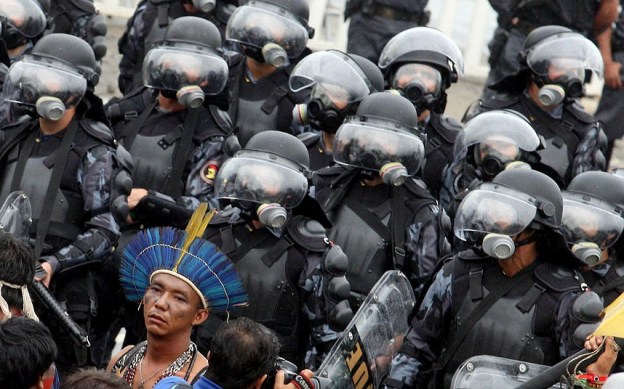
The summer of 2016 has only just started but it is already shaping up to be one fraught with acts of terror, sheer violence, and bloody aggression. This is true in so many places around the world. But in the United States, a nation which arrogantly declares itself both indispensable to world peace and stability and exceptional in its character, it is especially glaring due to the utter hypocrisy on display.  In just the span of a couple months there have been mass shootings, heinous crimes and acts of blatant police brutality all with a backdrop of political rancor, corruption and unabashed saber rattling on the world stage.
Philando Castile, murdered by police officer. Source Fox9.This should cause ordinary Americans to pause and reflect on what got us here. It should make us revile the powers that be who seek to boost their careers by instilling fear, racism and prejudice. It should make us insist on rational laws about guns and who should have access to them, and it should cause us to reject the militaristic aggression that defines ALL of our foreign policy. It should make us unite behind leaders who only reflect truthfulness, transparency and the will to lead the nation away from the old order of entrenched aristocratic privilege, militarism and merciless despotism. It should be a catalyst for societal change that tears away the ugly cloak of racism that shrouds every aspect of our culture, our institutions and our national persona. It should create a dialogue between people of conscience about our differences and our strengths and build a bridge that connects them.
Victims of Pulse Massacre in Orlando. Source NY Daily News.It is what I pray for but, sadly, not what I see happening. This is a broken nation slipping rapidly toward the maw of paranoid hatred and authoritarianism.  It is a society which still celebrates the myths of the “Wild West” ignoring its genocidal and dystopic realities.  It is a nation that delights in forgetting the crimes of its past and revels in creating false narratives that explain away its responsibilities today.  It is a culture corrupted by the cupidity of capitalism and the mindlessness of consumerism even while the ecosystems around it which support the madness of its addiction are withering into extinction.  It is a country not divided, but fractured into thousands of splinters held together, for now, with the most tenuous of threads.
Police fire at sniper which killed 5 officers at a Black Lives Matter rally in Dallas. Source Zerohedge.

Some have said that America is in its “1934 moment” referring to Europe prior to the second World War.  This may be an over exaggeration since history does not repeat itself exactly, but it does reflect and rehash old forms more often than not.  And with the earth’s climate growing more chaotic and resources beginning to dwindle this is a recipe of the most horrifying kind.  I hope that this is not so, but hope can be a capricious ghost distracting us with empty platitudes and leading us down a path to dangerous inaction.  We need more than hope now.  We need courage and cooperation.  We need community building based on our relationship to the earth and social understanding that shuns the barriers that prevent dialogue.  And we need it fast, because the streets of summer are becoming hot with the anger of the disenfranchised and red with the blood of innocents; and the scheming wolf of fascism is an opportunist always lurking at America’s gates ready to pounce.

Kenn Orphan  2016
The Preachers of Fear and the Winds of Peril

Donnie Swaggart. Photo source, Catch The Fire.The other day I had the misfortune of coming across Donnie Swaggart on a channel surf. He is the son of the disgraced, fire and brimstone televangelist Jimmy Swaggart. I never thought anyone could be more horrifying of a preacher than Jimmy, but his son appears to have successfully surpassed his father in being a completely repugnant and hate-filled lunatic. It seems the progeny of televangelists strive to excel at medievalism and vitriol. One look at Franklin Graham should confirm this to almost anyone.

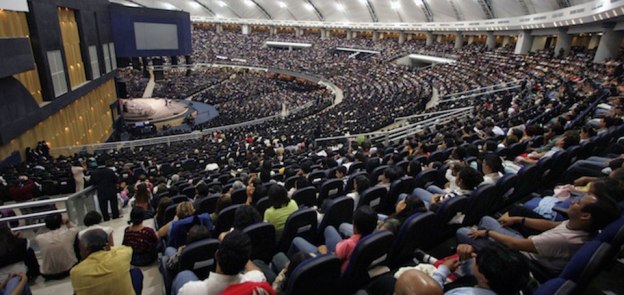
I ran across the blustering extremist Chuck Hagee on another day and had to question my own ears. His sermon sounded more like a war room briefing for Dr. Evil in an Austin Power’s movie. He “educated” his congregation, with the measured cadence of a a traveling snake oil salesman, on Iran’s nefarious plans somehow known only to him. He warned his followers of the perils of not “blessing” the state of Israel even though this smacks of idolatry, a grave sin in his religion.  But the camera panned out to his megachurch filled with saucer eyed congregants applauding when he talked about bombing the Islamic Republic in a pre-emtive strike.  My skin literally crawled.

John HageeThe same was true of Donnie Swaggart’s tele-church. Applause and “praise the Lord’s” rang out after each screaming rant against Muslims, Hindus and Buddhists, or marriage equality and transgender people, or “abortion” doctors and “lukewarm Christians” and all I could do is feel a deep sense of grief and dread. Is this emblematic of a dying empire?  Are they a foreboding sign of the Dark Ages we stand poised to enter given our planetary trajectory towards ecocide and climate chaos?  With a bombastic egotist, proud of his racism and misogyny, running for the highest office in the nation against a promoter of military aggression and defender of the corporate plutocracy, could this portend a dystopic landscape in the not too distant future?

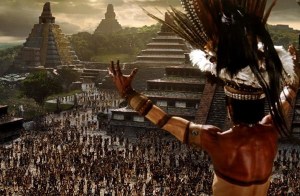
As the Mayan civilization died their leaders became even more fevered in their bloodlust for scapegoats. Human sacrifice was amplified to frantically stave off the ravages of crop failure and drought. Life in the cities became a living hell for many. And in ancient Rome the plutocracy became more obsessed with bread and circuses to distract demoralized masses from their misery as they feasted on whatever remained in their dying empire.   The megacity of the 21st century appears to be setting itself up for similar horrors but on a global scale, with those on the margins of empire suffering the greatest and most immediate pain. And in the midst of this I see preachers like Swaggart, Graham and Hagee gleefully celebrating apocalypse and ushering in a new era of “Inquisition” where anyone “otherized” is fair game for scapegoating. It would be unfair and inaccurate to paint all evangelicals with a broad brush, but it is a fair conclusion that after each coming drought or flood certain zealots, like the aforementioned televangelists, will jump up to point a finger of blame at the refugee, or those who oppose war, or the gender non-conforming person, or the immigrant, or the socialist, or the woman wearing a hijab.  This is not so far fetched a scenario when one considers that one front runner in US Presidential elections spews racist xenophobia to cheering crowds and a sycophantic media, and the other has a long history of warmongering and reactionary policies.
Mayan Civilization. Image from Storify.Americans have a remarkable capacity to think theirs is a society that is exceptional even with mountains of history to demonstrate otherwise. And they have been fed a steady diet of pablum to sate any thirst or longing for knowledge about the world in which they are a part of.  Consumerism is the real religion of America, and it is the greatest threat to all life on the planet.  How, then, will they react when their world begins to disintegrate in this new epoch of ecocide and the Anthropocene?  When climate change becomes the unbearable reality? When the infrastructure that is taken for granted begins to fail?  History has dark lessons to teach us on how that might very well look.   If allowed, those who peddle fear and those who revel in authoritarianism will marry each other at the first winds of peril.

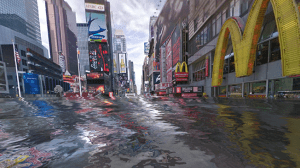
World under water. Image from Adweek.And with daily reports of temperature records being broken, drought and crop failure expanding, the oceans dying and fresh water waning, I cannot help but fear that those winds are beginning to blow in earnest.  If they are, God help us all.

Kenn Orphan  2016
Grieving in Silence

When I was in my early twenties I never thought that in my lifetime I would see the death of the Great Barrier Reef and scores of other coral reefs around the world.  I never thought I would see the temperature of the North Pole reach 50 degrees Fahrenheit above normal, or gigantic nation-sized shelves of ice simply break off and fall into the sea in Antarctica.  I never thought I would read about scores of species dying en masse, washing up on shores, or going extinct every single day.   I never thought that plastic in the seas would outweigh marine life by mid century, or huge swaths of forest succumb to pine beetles and blight.  Now twenty years on I have witnessed all of that and more, and most of it has happened in just the last few years. I often find myself being overwhelmed by an enormous tide of grief that envelopes my entire being; and it doesn’t countenance being ignored.

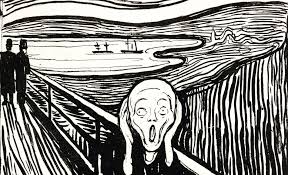
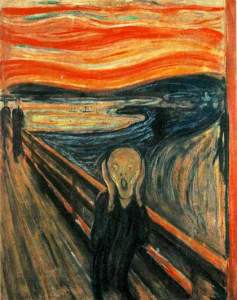
But I live within a society that values denial over truth.  And lately I have begun to relate more to Edvard Munch’s iconic painting “The Scream.” It seems to me to be the perfect emblem of our times, an anthem of despair silenced by the absurdity of the status quo.   I realize that many of us feel this deep sense of sorrowful terror; but many more can do little more than cry out in that private, interior space that our culture has consigned us to.
The Scream by Edvard Munch.Many traditions have a public means for displaying private grief.   Years ago, in Europe and in the Americas, those who were mourning the death of a loved one announced their grief to others by wearing a piece of black cloth around their arm or by placing a black wreath upon their front doors. Today much of that has been rejected as being too morbid or depressing Perhaps part of this normalization is due to our evolutionary heritage; but certainly the distractions of our industrialized culture have numbed most of our senses and reinforced the myth of our separateness from the natural world.  How else can the absence of outrage or public lamentation regarding the unfolding ecocide be explained?

I, like almost everyone else I know, go about my day in the routine that has been assigned to me by society.  I get up in the morning, take the drugs that keep my blood pressure in check, eat something processed, wash up and merge into the busy and confining passages that define modernity.  Living within this labyrinth discourages any introspection. There simply isn’t enough time, ever.  Thoughts about our place in the universe, or our mortality, or the meaning of it all are summarily dismissed in this culture.  In the media or in popular entertainment this subject is usually only included as a form of comic relief.  “What is the meaning of life?” has become the crux of jokes.  We are chided or ridiculed for thinking too much and sent to a cubicle to perform as a useful cog in the machine of industry; and then to another cubicle to shop for items we are told we need or that will “enhance” our lives, and then to a cubicle that we are charged money to live in and sit in front of yet another cubicle that tells us what to think, how to feel, and what is important.

Cubicles via The Repetitive Swan.This is the only way that it can all work.  It is the only way that the natural world can be compartmentalized and commodified.  It is the only way that the killing ideologies of militarism, nationalism and capitalism can go unquestioned.  Now, of course, we can see it has worked all too well as we march head long into extinction with nary a concern.  But the tower of mythology that supports every aspect of industrial civilization is beginning to crumble beneath the weight of its own hubris and apathetic indulgences.  We ignored the planet’s boundaries, and now those boundaries are closing in on us fast.

The world will look very different in just a mere decade or so.  This is not a prophetic declaration, it is a certainty that is easy to demonstrate.  Our leaders, when they are not in outright denial, reinforce the absurd notion that we still have plenty of time to stop climate change even as it is abruptly shifting before our eyes.  And sustainability is nothing more than a lie of consumer capitalism.  What, after all, is worth sustaining?  A societal model that requires an economy that must grow regardless of the ecological and social costs?  Or that tolerates mass species extinction?  Or that allows for endless military aggression to ensure a constant flow of minerals and fuel to produce objects which will end up in a landfill or in the ocean for eons?  If depression and neuroses are companions of cancer and heart disease in this model of sustainability, is this really worth preserving?

The stark truth is that there is little collective will to change the path we are currently on as a species.  Its trajectory is solidly towards collapse of the biosphere.  And even if monumental changes were implemented tomorrow by the powers that be it would not stop the seas from rising, or stop the process of ocean acidification, or resolve the plastic soup that churns at its center, or solve the never ending meltdown at Chernobyl or Fukushima, or prevent the release of methane from the seabed, or stave off famine for millions of people, and bring back thousands of species now gone forever.

Greetings from California by Joe Webb.I realize that this entire essay is antithetical to the zeitgeist of interminable optimism that defines our age.  In truth, I gave up trying to fit into this model a long time ago when I saw it as merely a kind of collective psychosis.  I write because, selfishly, I must.  It is my silent scream outward from a dark, interior pain of alienation, frustration and sadness.  I am not looking for a magic elixir or a pharmaceutical or an intervention to medicate or block out this pain either.  I want to feel it because it exists and because this is a culture that I wish to separate myself from; and I think we must all feel it and show this publicly while we still have time.  I don’t think that doing any of this will spare us the calamities that appear to be waiting for us just down the road, but maybe it can help us reclaim a sense of meaning to it all that has been robbed from us by an insipid, manic and brutal system of mindless consumption, and vacuous distraction.

I see what is unfolding and I cannot help but feel great sorrow.  My scream of anguish, though silent, can no longer be inward.  I am in mourning.  I grieve all that has been and will be lost.  And I will place a black wreath upon my door and wear a black cloth around my arm for all the world to see, not because I am brave, but because I simply cannot grieve in silence anymore.

Kenn Orphan  2016

On Being a Climate Migrant

When I first moved to San Diego twenty years ago I fell in love.  Blue skies, blue Pacific, lush, rolling hills of scrub oak and chaparral and warm sun most of the year. Back then the freeways did not seem to be full all day and night as they do now. People weren’t as aggressive towards each other either. I could walk along the beach alone and feel like I was the only one for miles; and the tide pools were brimming with life. The containment of urban sprawl was a cherished community value. The cost of living may have been high compared to many other places, but one could enjoy a very satisfying life even with a meager income.

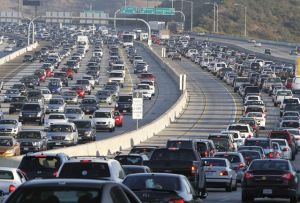
San Diego Traffic. Photo from LA Times Blog.Now living here has become very costly, and enjoyment a rare luxury. The people seem perpetually hurried and harried. And so many of the hilltops have been scraped away for housing developments, shopping malls and industrial parks. Wildlife has been cordoned off into “preserves” and roadways lace the canyons and mesas. Make no mistake, I love California and will always consider it my home in many ways. But the state I knew only exists in memory. And now we are facing a megadrought in a place where the population is ballooning with seemingly few taking notice.

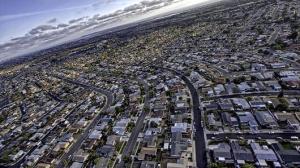
Suburban Sprawl in San Diego. Photo, Getty Images.So my partner and I decided a couple years ago that it was time to move on. We are collecting what we need and embracing our loved ones before we embark on a journey northward to the place of my ancestry and that I consider a home from my childhood, in what is shaping up to be the last epoch of human civilization as we know it.  I would like to carve out a small sanctuary in one of the few pristine places left on the planet. Is this hyperbolic? Am I only two cans of corn away from being an “end times prepper?”   I’m sure to many Americans I am being extreme. When I tell people that I am migrating from California because of abrupt climate change, and the ecological and societal collapse that will accompany it, I am often met with blank stares or eye rolls. I think this is because the reality of our dire circumstances has not yet hit home to most Americans who live in privileged, coastal cities. But to those of us who are paying attention the approaching maelstrom is undeniable.

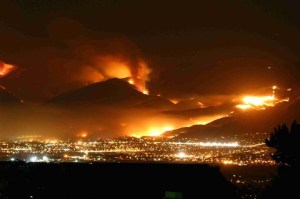
San Bernadino Fires Getty

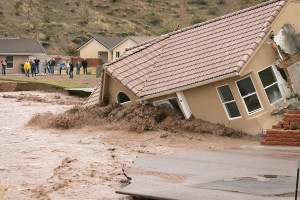
Homes fall to flash flooding in California. Source NBC News.Our planet has been warming, but this trend has taken leaps and bounds in the past few years with each one hotter than the last. Records are being shattered each month. For most of the world’s population calamity is not some distant risk factor. Water scarcity and famine now tower over hundreds of millions of people from Sudan to India to Malaysia and beyond like ravenous angels of death. Species extinction is accelerating across the globe as well. It is like watching a dystopic science fiction flick with no end of the chaos in sight.

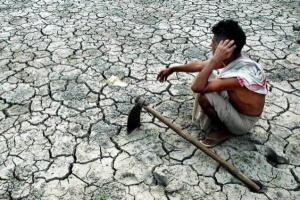
Drought in India. Photo Source India Water Portal.

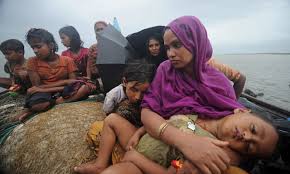
Rohingya Refugees Source The GuardianTo say that all of this is overwhelming is an understatement. But I think what is perhaps worse than this is living in the heart of a culture where grief is ridiculed and that is defined by a collective disconnect from the unfolding reality of ecocide. The sham that is American democracy is also demoralizing, especially when given the current spectacle we are seeing in the Presidential election cycle. And with climate change appearing to accelerate, the prospect of living in a divisive, burgeoning police state is terrifying to say the least. Dying empires cast long shadows of cruel absurdity as they unravel. And if one lingers too long in its darkness the soul begins to wither and harden.

Bread and Circuses Source International TimesSo I am declaring myself a climate migrant. But I am lucky. I do not have to clamber on to shoddy boats and risk drowning, or take a perilous journey on foot across a parched and dangerous land. I see what is ahead and I have the privilege of fleeing from a lot of it. This isn’t much consolation, though. Only a smug sociopath would get satisfaction with being right in this instance. For anyone with a conscience there is no joy in telling people “I told you so” when faced with their suffering and sorrow, even if you have been largely ignored or dismissed as over the top for years. Some can do this with ease. They can point jagged, scornful fingers at the smoker who is now dying from lung cancer, and feel somehow justified in doing so even as such callousness reduces their own humanity to ashes. I believe that the depth of ones character is measured in the compassion one has for other beings; and I haven’t shed near enough tears to measure up to the tremendous suffering of our planet and all of its inhabitants.

Young Buck On The Second Peninsula Lunenburg Nova Scotia is a photograph by William OBrien.

Giants Lake Wilderness, Nova Scotia. Source, The Chronicle Herald.I hope that this move will at least demonstrate just how serious and dire I think things really are. Maybe it will cause some to sit up and pay attention. I realize that most people do not have the resources to take bold steps like this; and I am not attempting to cast myself as a martyr. I do not possess the spiritual credentials to warrant such a distinction anyway. But I think if more of us take steps, big or small, that shun mindless consumerism and recognize the urgent state we are all in, we may have a chance of building communities of compassionate souls who cherish each other and hold sacred this beautiful planet while we still have time left to do so.  I can only hope it will.

Kenn Orphan  2016
The Future Belongs to You

Recently, I’ve seen calls from the Democratic Party, and many of their supporters, for progressives and the Left in general to “unite” behind Hillary Clinton. This is nothing new for those of us who have been around a few elections cycles; but for millennials this is becoming a lesson in how this sham of a democracy works. You see, the Democratic Party elite have been lurching toward the right for decades.  They may be progressive when it comes to social issues for political reasons, like LGBTQ and women’s reproductive rights, but they, along with their Republican counterparts, have forged an unbreakable bond forged in the gilded towers of the elite.  It is called oligarchy.  And there is not a shard of light between them when it comes to wealth, war and the preservation of empire.
The Trumps and Clintons show the face of oligarchy. Photo from New York Times.The reality is that the vast majority of the American public does not vote in any of its shows, er, elections. Maybe they are apathetic, maybe they see it for the farce it is. But in any case they have checked out of the political process allowing the corporate, wealth class to take hold of all power in this country.  The result, of course, is a plutocracy where the police are militarized, prisons are over flowing, the environment is imperiled and the wars of plunder are unending.

The call to unite from Party officials, campaign public relations and Hillary herself may be desperate, it may be cynical, or it may be a sincere rallying call for some, but it is not unique in the least. And it requires absolutely no real commitment to social, economic and environmental justice from those who are calling for it. It seems they can easily give a pass to Hillary’s war mongering, or undying love of neoliberal capitalism, or her promotion of fracking and the funding she gets from the fossil fuel and private prison industry.  They can overlook her support from Wall Street and multinational corporations too.  And they expect everyone else to do the same.

But in the past week we have seen some Hillary supporters shut down Bernie Sanders Facebook pages by posting porn and other objectionable things on them; and we have learned that a pro-Hillary super pac is funding social media trolls to attack anyone who dares criticize the bloody queen of chaos.  Grant it, there has been some of this on both sides, but the Clinton campaign has been far better funded; and this is what makes these calls of unity the supreme insult on top of injury for many people.

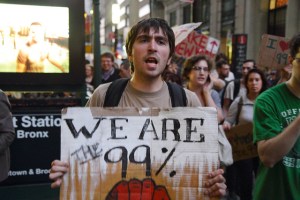
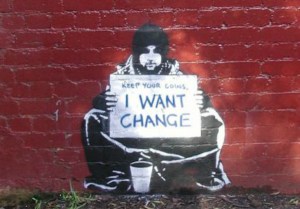
Occupy Movement protestor. Source Gawker.But there is hope. I have faith in millennials who have taken to the streets and organized. Whether it be Black Lives Matter or Climate Change activism or BDS, the energy for change is unmistakable. They have shamed my generation. They have shown us that “reform” is just a code word for the status quo and that revolution lies outside the two party hegemony, not within it. If they keep up their agitation of the establishment they may just topple this empire of lies, corruption and death. And in a time of looming climate chaos, we need this more urgently and soon.

But don’t wait for Gen Xers to help you out.  With some notable exceptions, most of us have eased into comfy armchairs and will not take to the streets unless it is to go for a latte. The future belongs to you, and I’ll be right there in the streets with you.

Activism among millennials. Photo from Photo Stock.Kenn Orphan 2016
Earth Day and the Phantoms of a Pathological Culture

I must start with a confession.  I have always been troubled by the concept of Earth Day.  I understand its origin and why it came to be, but as an environmentalist I see it as window dressing an unfolding disaster of monumental proportions.  It’s not that it is useless.  Raising awareness is never useless.  But over the years it has morphed from an almost spiritual movement for ecological consciousness and justice into an opportunity for corporations and politicians to tout their empty gestures at “saving the planet” all while they mercilessly plunder it.  It also has the effect of neutralizing public outrage at the dire state our world is in.  It spreads an all too pervasive “feel goodism” to a situation that is truly existential, not only for countless other species on the planet but for our own.

Corporate Greenwashing, by Pete Dolack via Climate and CapitalismIn our time, the powerful have crafted enormous facades of pomp and ceremony extolling their efforts.  Their conferences and consortiums serve as a distraction from their business as usual pillage, and a placation of our collective angst against the backdrop of a gathering storm.  But each year gives us a terrifying glimpse into a fast approaching future.  One rife with super storms, floods, mega-droughts, crop failures and species collapse.

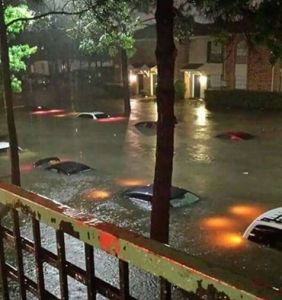
Reocrd breaking Houston floods, April 2016, photo via Traci Siler.The economic model that dominates the world is incapable of grappling with our dire predicament.  It simply does not possess any sense of ethical obligation, even when it comes to its own species.  It has become imperative for us to shake free from this paradigm of self destructive failure and begin the process of true community building.  We can talk about the benefits of permaculture and a gift economy, but in order to reach this we need to do something that the Western world routinely scoffs at and ridicules.  We must take a long, hard and urgent look into the underpinnings of our entire way of life and the pathology that is industrialized civilization itself.  We must look into our soul.

Alberta Tar Sands were once pristine boreal forests. Photographer Peter EssickWe can start with natural landscapes.  They are the contours of the soul.  And they have been, and continue to be, brutalized and decimated, or replaced by concrete, glass and steel.  The effect this has had on our species is collective alienation and crushing despair.  Modern mega-cities are emblematic of this tremendous disconnect from reality.  They are scratched onto the land with feverish disregard for nature as well as for their inhabitants.  They create an illusion that we are separate from nature, divorced from its power except when confronted by a storm, earthquake, volcano, flood or heatwave.  Western science and religion, in whatever form it takes, reinforces the myth of separateness from the natural world, and otherizes the myriad of species we share this planet with.

Mexico City. Source Stock Footage.When European explorers set out to “discover” the world most did not do so as observers.  They unmoored their ships and set sail in search of gold and other “precious” metals.  In the process they decimated indigenous societies and imposed their world view on where ever they landed.  They justified all of this madness through a perverted form of patriarchal religion which augmented a hierarchical system of domination and class that persists to this day.  This paradigm still informs the current global economic system, neoliberal capitalism, which commodifies every thing and everyone in the known universe, and transforms them into exploitable, consumable or disposable products.

mindless consumerism Philosophers StoneThe truth is that materialism corrupts the very nature of the human soul. It deadens the tendrils of empathy and compassion that have evolved to give meaning to our existence.  And it creates an insatiable void needing to be filled by elusive and meaningless junk, which is eventually discarded once the novelty wears off.  It is the reason landfills are bursting their confines. It is the reason the world’s oceans have become a toxic soup where plastic refuse is fast out weighing fish and other wildlife.  It is behind the rising global temperatures and changing climate. It is the cause of stagnation, addiction and ennui within the general public. It is the reason for every war and conflict; and why our species, along with every other one on this planet, is facing extinction.

Landfill, photo from Stock Footage.To be sure, we cannot expect the dominant culture to bring about any positive or substantive change.  It cannot.  Not now, not ever.  It reflects the pathology that industrial civilization is at its heart.  Its “solution” to the looming ecological collapse is to spruce up its image to the “consumer” by taking small, meaningless actions that momentarily sooth our conscience at the moment we are consuming their product.  At its very core it is a cancer that must grow rapaciously regardless of the terminal malignancy it inflicts upon the living planet and the weakest of our species.  And, as I have noted before, a cancer cannot be “reformed.”  It must be extracted or eradicated, or the condition will lead to nothing other than death.

But we need not be plugged into this matrix of delusion and absurdity.  We need not play the cruel game of mindless consumption of sentient beings housed in torturous concentration camps, or gadgets crafted in suicidal sweatshops that promise a better life, or entertainment that dehumanizes us or others, or trends that celebrate avarice, militarism and violence.  That choice is still left to us.  And our agency lies in us realizing this and beginning a transformation that connects us to each other and to the living, yet besieged and battered planet on which we all depend.

IMG_2560I have another confession.  I am not a preacher.  I loath those who connive or badger or guilt people into altering their lives.  I am one of you.  I was born into this theater of the absurd, bathed from conception in petroleum, the primordial life blood of industrial civilization.  I have been dazzled by the spectacle and I have consumed far more than I have ever had a right to.  So I am taking this journey with you because none of us, not one, can do it alone.  We cannot face the phantoms of our pathological culture in isolation and think we will emerge on the other side unscathed, intact and whole.  One thing I am certain of is that the future of humanity, perhaps nearer than anyone of us could fathom, is destined to be full of misery and strife.  In truth it already is for the vast majority of us and countless species we are not even aware of.  But if there is any solace to be found it begins in our refusal to be willing participants in the unfolding ecocide, and the recognition of ourselves in each other and every other life form we are surrounded by.

The only way I can honor Earth Day is to grieve all that has been lost, and to refuse to participate in the ongoing destruction.  It only has meaning to me if it is not externalized as a commodity with a catchy jingle, and is the beginning of the end for the pathological mindset that has gotten us to where we are now and the collective death knell that lies before us.  Maybe the best way to “celebrate” it is in realizing that we need a new community with a natural soul, unseparated from this world.  Because in its absence it is nothing more than a mechanical set of empty routines.  And a soul without a community has no meaning at all, and is adrift in a universe where love cannot penetrate.

Kenn Orphan  2016
#earthday  #climatechange  #capitalism  #ecocide  #consumerism

The Sky is Falling

A few years back I had an experience that hammered home the notion of the normalcy bias. I worked for a healthcare service in Southern California which assisted home bound patients and their families. That summer the hills and scrub brush ignited into one of the West’s most ferocious wild fires. As it devoured the countryside my colleagues and I hurried to warn all of them who were in harms way and advise them to evacuate. We told them to listen to the firefighters as they knew best. One family I called were unconvinced. They said that others in the neighborhood weren’t leaving so why should they?

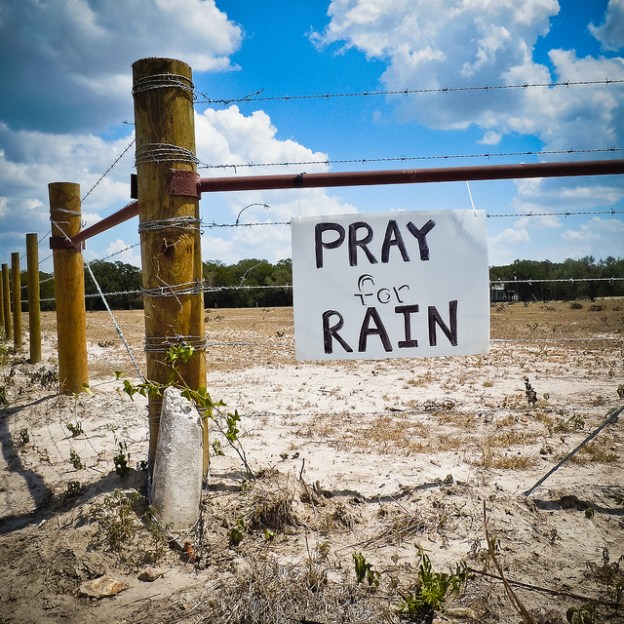
Drought induced wildfires threaten a neighborhood in California. Photo: David McNew/Getty ImagesA few hours later we made another frantic call to that same family to urge them to leave. They said they could see flames coming up the hillside behind their house and the black smoke was thick and almost unbearable.  But they were still unconvinced of the urgency since the electricity was still on and they could watch the news on television which did not warn them of any immediate threat. Eventually they did leave at the behest of determined firefighters. They were spared, their house was not. I have thought about them a lot over these past few years when thinking about the unfolding events in our world today. There is a segment of the population who appear to go too far in preparing for disaster; and in doing so they forfeit appreciating life here and now. But have we, as a society, normalized our dire predicament and the looming ecological catastrophe so much that we have paralyzed ourselves in a collective trance?

The human brain is a remarkable organ, but it is far less unique than our egos would like to admit. Like practically every other species we share this terrestrial orb with, we possess an evolutionary defense mechanism which protects us from overwhelming stress. The normalcy bias has been analyzed by many clinicians and scientists for years. It is that strange ability of an organism to deny impending danger, standing almost paralyzed in a hypnotic stupor in its face. This is most likely where the expression “deer in headlights” comes from. And it may be accurate to surmise that, similarly, the human species has its gaze fixed ahead into the blinding beams of a racing truck.

Normalcy bias. Image from Stock FootageWe have never been here before. This sentence sums up practically everything we are seeing unfold before us when it comes to carbon emissions, polar and glacial ice melt, erratic temperature fluctuations, ocean warming and acidity and species extinction. It is a new and terrifying landscape of the unknown. But despite all of this, industrial civilization appears to be accelerating toward the abyss rather than slowing down. Indeed, our leaders have reinforced this trance of normalization by numbing our senses with mindless entertainment and advertisements. How easy they distract us from our own existential crisis with new, plastic bobbles or gadgets and salacious celebrity gossip. How easy they play our emotions with political spectacle, nationalistic nonsense and manufactured outrage.

But they are not as intelligent as all this may imply; they have simply mastered the art of illusion. They are clever magicians in a rather cruel and, ultimately, fatal performance. Thanks to capitalistic authoritarianism they own the media which has become an effective mouthpiece and stage. They also own the institutions which are, in theory, designed to protect civilization and the common good. But cupidity, avarice and power are their only interests. They can see the fire climbing the hillside and they can certainly smell the smoke; but they know they are powerless to stop it so, instead, they do what they do best. They divert attention and create dazzling spectacle. They manufacture crises which they can, at least in pretense, handle effectively while they downplay actual threats. All this while they accumulate enormous material wealth as if to protect them from the angry hordes ascending their piles of gold with blazing torches.  But are they, alone, to blame for where we are at now?

To be sure, civilization began before any of us where born; and within it lay the seeds of planetary destruction yet unborn. And industrialization sealed this covenant. The institutions our forbears built codified and ritualized our artificial separation from the natural world. They created elaborate myths to justify raping and slaying it, and profiting from the crime. But though we cannot ignore the sins of our ancestors, we are the ones to blame for continuing the illusion and the pillage and even expanding upon it. Consider this definition of civilization from Wikipedia:

“A civilization… is any complex society characterized by urban development, social stratification, symbolic communication forms (typically, writing systems), and a perceived separation from and domination over the natural environment by a cultural elite. Civilizations are intimately associated with and often further defined by other socio-politico-economic characteristics, including centralization, the domestication of both humans and other organisms, specialization of labor, culturally ingrained ideologies of progress and supremacism, monumental architecture, taxation, societal dependence upon farming as an agricultural practice, and expansionism.

Historically, a civilization was a so-called “advanced” culture in contrast to more supposedly primitive cultures. In this broad sense, a civilization contrasts with non-centralized tribal societies, including the cultures of nomadic pastoralists or hunter-gatherers. As an uncountable noun, civilization also refers to the process of a society developing into a centralized, urbanized, stratified structure.

Civilizations are organized in densely populated settlements divided into hierarchical social classes with a ruling elite and subordinate urban and rural populations, which engage in intensive agriculture, mining, small-scale manufacture and trade. Civilization concentrates power, extending human control over the rest of nature, including over other human beings.”

With few exceptions, we haven’t yet shattered the illusion of this separation from or dominance of the natural world, and groped our way out of the cave and into the light. We have not yet realized, as the above definition demonstrates, that it is we who are fully dependent upon the benevolence of nature, and not the opposite.  But nature is uninterested in our timetable. She looks indifferently at our bridges and buildings, or our money and digitalized memory, as she does our arrogance, folly and foibles.  And our ignorance, willful or not, of the consequences of all of this will not delay her fury. Is all this to say that nothing good has come of industrial civilization?  No, but it has most certainly proven to be both the poison and the cure for all that afflicts human existence.  It developed within an unnatural framework that purported to control the uncontrollable. And this paradigm has driven countless species to their end, with our own being on a very short list.

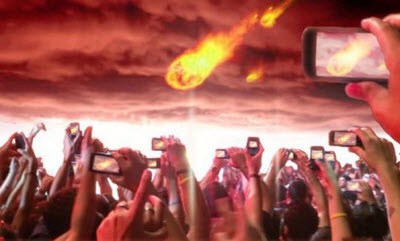
Normalcy Bias End of world. Image from veryfunnypics.euLike the family resistant to fleeing their imperiled home, we are resistant to fleeing the trappings of industrial civilization. Scientists, like the firefighters, have been warning us all about what looms ahead. And we have largely dismissed them, preferring instead to hold fast to the fleeting comfort of an illusion. I say all of this knowing full well that I am in the same place as many reading this. I have enjoyed the luxury afforded to me through a system of madness and disconnect. But now the ancient blood of fossils on which all of this is built is beginning to wane and become ever harder to come by. We could say this is a good thing, but that would be less than honest. The damage is done and the dominoes have begun to fall. Nuclear armed nation states are sparring, crowds are lining up for water and rice, and birds, fish, frogs and animals are beginning to die out en masse. We in the privileged West have not yet seen what most in the world are witnessing, but to think we are insulated simply because we possess more money is the height of farce and absurdity.  We are all in the same house, and the fire is getting closer by the day.

No one wants to be the alarmist chicken who believed the sky was falling when struck on the head by a falling acorn in the children’s tale “Henny Penny.” But the signs of a looming catastrophe are far more plentiful than one acorn. The fires will come. The waters will rise. The storm clouds will gather. And we are running out of places to escape to. In the years ahead we will be faced with the greatest challenges our species has ever known. Many will be clambering to higher ground away from the rising seas, others will be chasing after water in drought stricken lands. The best response to all of this is to face the storms together, fearful, trembling, yet in the embrace of each other and our shared humanity, especially for the weakest among us.  But it is hard to imagine what will become of us after the final warning has been issued, and so many remain unconvinced that there is even a fire to begin with.

Kenn Orphan 2016

Another Year, Another Paradigm Shift

“Our own life has to be our message.” ~ Thích Nhất Hạnh

This month the solstice gently ushered us all into a new year. In times past, this occasion was often viewed as an opportunity for reflection.   It is a turning point when the sun begins to intrude into our lives just a bit more each day, casting away shadows, one by one.  As the calendar scrolls down another year I have been reflecting on my personal journey as it relates to the changing and tumultuous world around me.

2015 was a year where climate change, endless war, mass migration (the biggest since the second World War), the growth of the repressive, militarized police/surveillance state and environmental decimation all appeared to be converging at a crossroad, with industrial civilization itself teetering on the brink of collapse as a result.  Has it happened yet?  No.  But collapse should be understood as a nonlinear phenomenon. It is more akin to the sputtering engine of a damaged airplane, dying in fits and starts before the ultimate plunge.

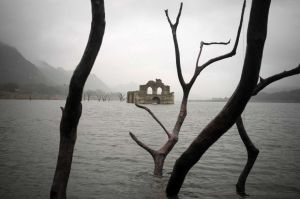
Colonial church emerging from a receding reservoir in Mexico. Photo, David Von Blohn, STR.
The acknowledgement of any of this can send us in the direction of conscious grief and deepened empathy or paralyzed despair and indifference.  It has the power to “widen our circle of compassion” as Albert Einstein encouraged and view the death of one thing as the foundation of life for another, or find us at a dead end of alienation and apathy.  Ours is a culture of denial, fraught with vapid phantoms peddling sadistic entertainment and extolling rapacious consumption on a planet with finite and dwindling resources.  It is a theater where all the players are mindless and the audience is blind.  When ones eyes are pried open a searing light is cast on a stage of depravity and misery.  But this experience, traumatic as it is, can also be a catalyst for “a fundamental change in approach or underlying assumptions.”  A paradigm shift.

Selfie. Image from Shutterstock
In our society narcissism has become a celebrated virtue; but I have never been very good at separating myself from the suffering of others.  A forest somewhere is felled, I feel as though my body has been hacked into.  A refugee is demonized, I feel as though it is a personal attack on my own character.  Another species goes extinct, I feel as though a piece of my soul has died.  Mind you, I am not admitting any of this to curry admiration in anyone’s eyes.  In fact, this part of who I am I consider deeply private and I often struggle with my own grief as a result of this kind of association.  But how can I, as Thích Nhất Hạnh says, make my life my message without acknowledging this pain publicly?

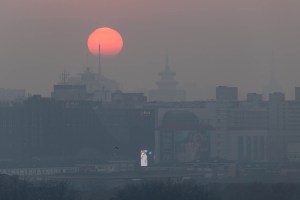
Beijing air pollution in December, 2015. Photographer, Xiao Lu Chu, Getty Images.Industrial, consumer civilization, with all of its self destructive trappings, deeply wounds the soul as much as it wounds the body, communities and the living earth itself.  But wounds, both physical and psychic, have a remarkable ability to heal with an intelligence that is beyond our consciousness.  The soul, just like the body, will repair itself too leaving a scar as a testament to the struggle and a symbol of solidarity with others who suffer.  But this can only happen when we show it to the world.

A physical wound must be covered for a certain amount of time to protect it from infection, but its bandages must eventually be removed exposing it to fresh air if it is to complete the healing process.  This is also true of wounds to our soul.  We must eventually reveal them to the world and be receptive of the empathy that can bring.  This, in turn, becomes our message.  It is up to us, though, to nourish the conditions that make this healing possible, and to apply whatever balm is necessary.  Healing our wounds does not spare us from death.  But in nature, even death itself is a fount for the renewal of life.

Mother Earth. A painting by Jeness Cortez Perlmutter.We cannot stop the convergence of very bad things in this world. None of us can hold back the rising seas or quell the warming air. And the specters of war, avarice and tyranny continue to haunt our world every day.  In truth, the end of all we know may be closer than any one of us could fathom. But that does not mean that all is lost.  In her book “Love in the Age of Ecological Apocalypse: Cultivating the Relationships We Need to Thrive,” Carolyn Baker eloquently expresses how we can react to all of this:

“As the bearers of conscious self-awareness on this planet, we have failed miserably thus far in recognizing our inextricable oneness with the universe. Whether we can refine this innate capacity in time to prevent the annihilation of the Earth—a travesty in which we have consciously and unconsciously colluded, is unknown. Nevertheless, in the remaining days of our presence here, we can love the Earth and we can love all its sentient beings.”

Indeed hope does exist, but it is meaningless unless it expands our capacity to love.  This truth is the paradigm shift we are all in desperate need of, and one that will be even more urgent in the troubled and stormy days that lie ahead.

Kenn Orphan 2015

For the Record

When I was a young boy I dreamt of other planets in far flung solar systems in our galaxy.  I would draw pictures for hours of what I thought alien life might look like and try to imagine civilizations that may have evolved to our level of technology or beyond. I would build starships out of loose leaf paper and plastic utensils and fly them through my house and out into the backyard.  As I grew older these musings faded, but never died.

I confess I still have some of those starships in an old trunk, and every now and then when no one is around, I take them out for a flight around the room and picture myself traveling to one of the countless planets that fill the Milky Way.  The alien life I imagined as a child has expanded, but in ways I could never have dreamed of when I was very young. I have had the good fortune and privilege to travel the world, learn about other cultures and encounter wildlife up close. I began to realize that I did not have to travel to a distant world to see alien life.  It was all around me, and it was wondrous.

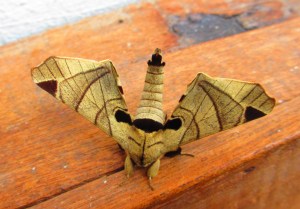
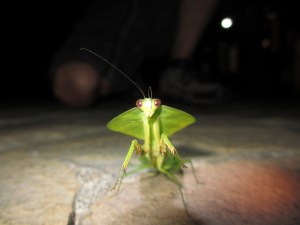
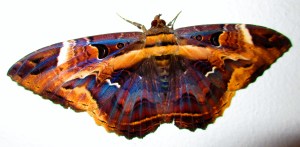
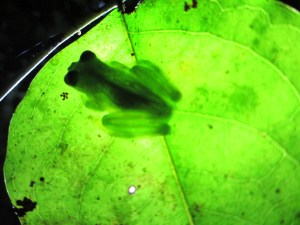
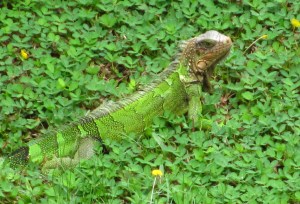
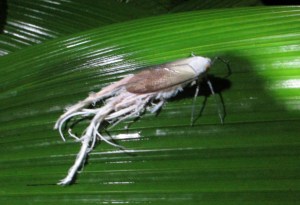
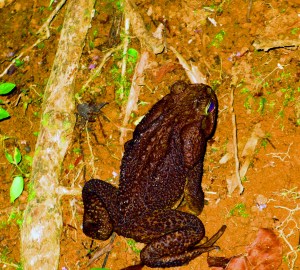
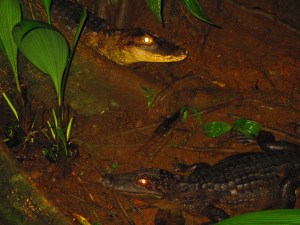
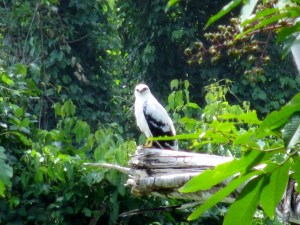
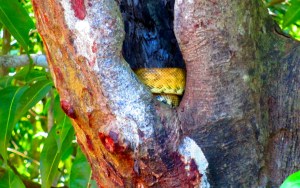
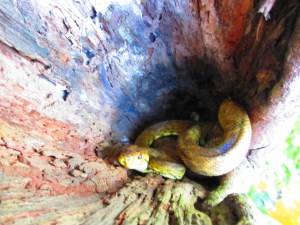
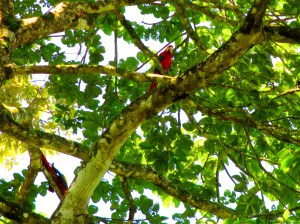
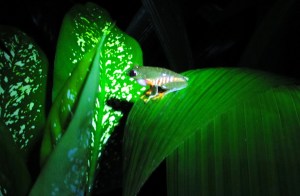
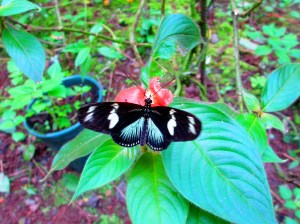
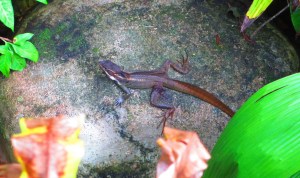
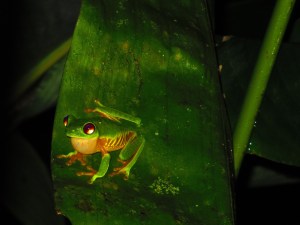
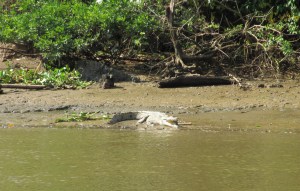
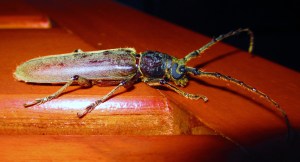
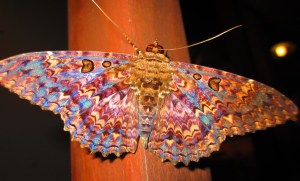
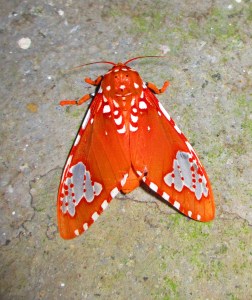
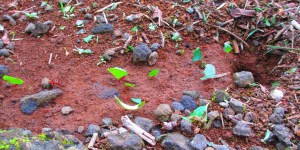
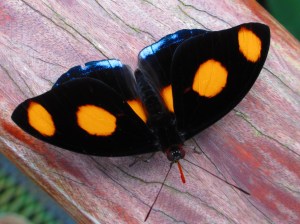
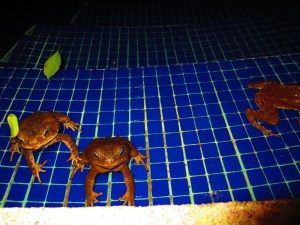
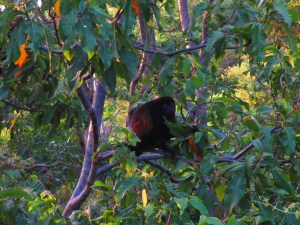
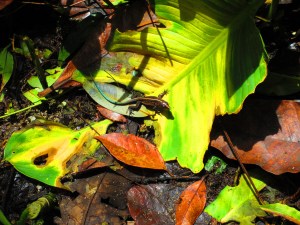
According to a growing number of scientists, we are in the grips of the Sixth Mass Extinction; and, sadly, we can only guess how many incredible life forms have been eliminated by the rapacity and carelessness of industrial civilization.  Hundreds more species go extinct every day, and it is likely that our own may be on that list in the future, given our trajectory and penchant for self-destruction.  But I have compiled a humble collection of some of the creatures my partner and I encountered on our numerous journey’s to Central America.  And I wanted to put them on the record and share them here.

Please keep in mind that I am not a biologist so I will not attempt to identify any of the insects, plants or animals with scientific names.  This is merely a photo essay to register their marvelous existence on this planet.  I hope they fascinate you and enliven your imagination and sense of wonder as they do mine.

IMG_1410IMG_1698

IMG_1405IMG_1607IMG_1586IMG_1609IMG_1691IMG_1621IMG_1718IMG_1633IMG_1635IMG_1628IMG_1612IMG_1746IMG_1555IMG_1576IMG_1618IMG_1767IMG_1416IMG_1415IMG_1407IMG_1768IMG_1562IMG_1693IMG_1713 IMG_2521IMG_2560starfishslothgeckored frog

Kenn Orphan  2015


Walking With Grief in the Anthropocene

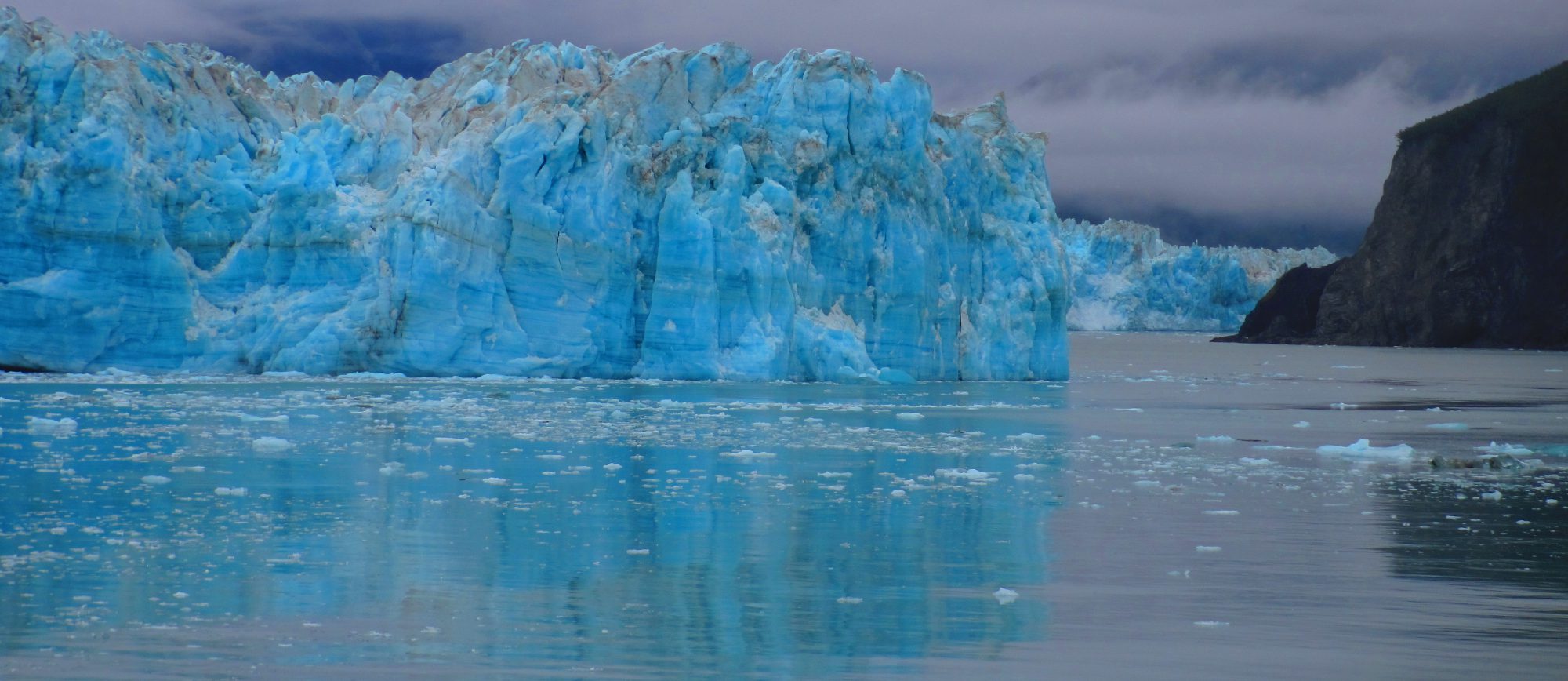
It was a couple years ago that I saw my first glacier. I was on a trip to Alaska with my family before my father died. He had always dreamed of seeing the region, and we were happy we could do this one, last trip to fulfill it for him. We cruised through the Inside Passage past glaciers glimmering with cerulean blue ice, drove through part of the Yukon Territory of Canada by turquoise lakes, and hiked close to one of the last, ever receding glaciers.  All of it was as awe inspiring as it was heartbreaking.

IMG_4293I am one of those people who finds it difficult to set aside what I know about the planet and where we are headed, and simply enjoy the moment for what it is. I cannot walk through a forest without feeling a sense of dread that it will someday be felled. I cannot watch whales breaching the waves without wondering if they will die out in my lifetime. I cannot see a glacier and ignore the overwhelming evidence that globally, they are in retreat. And I have come to realize that I am far from being alone in this feeling of joy mixed with sorrow.

IMG_4310Grief in the West is often viewed as some kind of disorder to be dealt with by pushing it away, ignoring it or medicating it. We often hear well meaning people suggest to the bereaved that they “keep themselves busy.” If our grief lingers, we are told that we are “depressed” or “not coping well” or that we need “closure.”

The reality is that our consumer culture is incapable of understanding grief. It is designed to ingest anything and everything just to keep it going. It does not pause for reflection. It is a giant throat ravenously swallowing the earth with our soul along with it. But this culture is destined to slam into a wall of reality on a finite planet with dwindling resources. There is a point of no return and it is closing in fast, and no distraction or technological fix will be able to stop the impending crash of a system that is fundamentally flawed. One way or another, we will have to face the crimes we have committed against the natural world on which we all depend.

An empty big box store. Photo by Kenn Orphan.I, like many others in the West, understand the paradox of where we stand. My family and I took this journey to Alaska thanks to our inordinate privilege. By global standards we are wealthy and benefit from being born into one of the most powerful empires the earth has ever known. And while many of us in the West mourn what industrial civilization has done, most of us still benefit from its excesses, wars of plunder and ecocidal convenience. But none of us can avoid getting caught up in the coming turmoil. It is a tide that will sweep all of humanity into its chaos. It has, in fact, already begun to do so in many areas of the planet, although this is carefully obscured by the wizards of Western, consumer society.

Air Pollution in China ChinaFotoPress Getty Images

Highly polluted and toxic lake in Bangalore, India, which routinely catches fire. Photo Anoop KumarBut perhaps if we shun the impulse to avoid feeling despair, as this culture encourages us to, we can step into our sorrow and walk with our grief as a companion rather than an adversary. In doing this we may be able to open up corridors of empathy and compassion for each other and the myriad of species we share this planet with. Grief can be a guide through the wilderness of alienation that this society perpetuates. It can deepen us and open our senses to a force greater than ourselves. It won’t spare us our fate, nothing can. But it may spare us a kind of spiritual death.

IMG_4243Standing on the deck of the boat, passing under great mountains of melting ice, I felt that sense of wonder that a child does when struck by the awesomeness of life itself.  I also felt immensely small.  My heart beat with an ache as I attempted to comprehend what my species and, in particular, my society has done to this precious life giving earth.  I felt the cold air from that melting glacier roll over me.  But this time I decided to not chase that specter of sorrow away.   I embraced him like a long lost friend.  And he smiled at me and said, “what took you so long?”

Kenn Orphan 2015


IMG_0058This essay is dedicated to the memory of my father, George Orphan, Sr. (June 7th, 1925 – November 25th, 2014).  You will be forever in my heart and I can never repay you for the gifts you have given me.