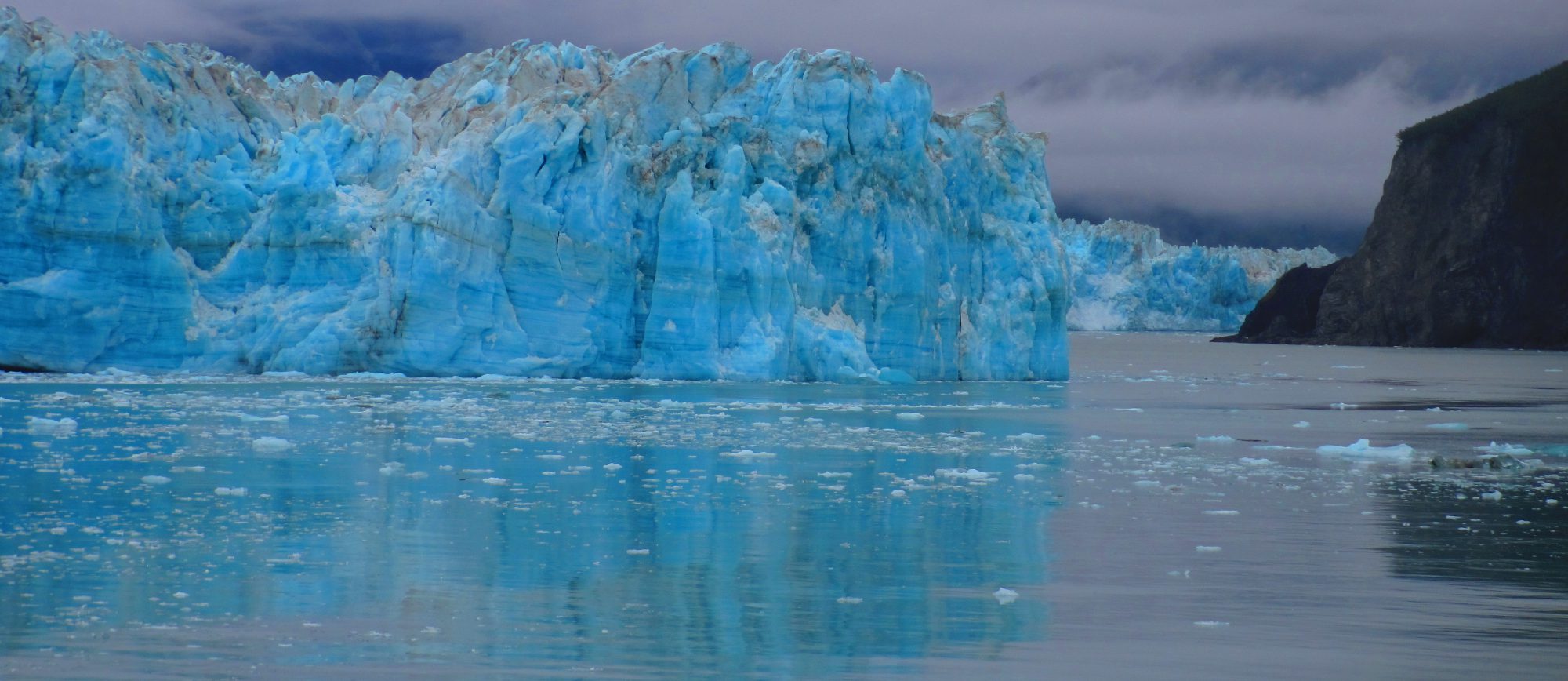
When I was in my early twenties I never thought that in my lifetime I would see the death of the Great Barrier Reef and scores of other coral reefs around the world. I never thought I would see the temperature of the North Pole reach 50 degrees Fahrenheit above normal, or gigantic nation-sized shelves of ice simply break off and fall into the sea in Antarctica. I never thought I would read about scores of species dying en masse, washing up on shores, or going extinct every single day. I never thought that plastic in the seas would outweigh marine life by mid century, or huge swaths of forest succumb to pine beetles and blight. Now twenty years on I have witnessed all of that and more, and most of it has happened in just the last few years. I often find myself being overwhelmed by an enormous tide of grief that envelopes my entire being; and it doesn’t countenance being ignored.
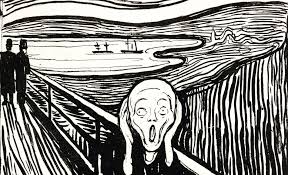
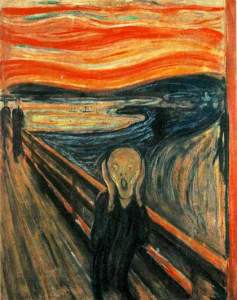
But I live within a society that values denial over truth. And lately I have begun to relate more to Edvard Munch’s iconic painting “The Scream.” It seems to me to be the perfect emblem of our times, an anthem of despair silenced by the absurdity of the status quo. I realize that many of us feel this deep sense of sorrowful terror; but many more can do little more than cry out in that private, interior space that our culture has consigned us to.
 Many traditions have a public means for displaying private grief. Years ago, in Europe and in the Americas, those who were mourning the death of a loved one announced their grief to others by wearing a piece of black cloth around their arm or by placing a black wreath upon their front doors. Today much of that has been rejected as being too morbid or depressing. Perhaps part of this normalization is due to our evolutionary heritage; but certainly the distractions of our industrialized culture have numbed most of our senses and reinforced the myth of our separateness from the natural world. How else can the absence of outrage or public lamentation regarding the unfolding ecocide be explained?
I, like almost everyone else I know, go about my day in the routine that has been assigned to me by society. I get up in the morning, take the drugs that keep my blood pressure in check, eat something processed, wash up and merge into the busy and confining passages that define modernity. Living within this labyrinth discourages any introspection. There simply isn’t enough time, ever. Thoughts about our place in the universe, or our mortality, or the meaning of it all are summarily dismissed in this culture. In the media or in popular entertainment this subject is usually only included as a form of comic relief. “What is the meaning of life?” has become the crux of jokes. We are chided or ridiculed for thinking too much and sent to a cubicle to perform as a useful cog in the machine of industry; and then to another cubicle to shop for items we are told we need or that will “enhance” our lives, and then to a cubicle that we are charged money to live in and sit in front of yet another cubicle that tells us what to think, how to feel, and what is important.
 This is the only way that it can all work. It is the only way that the natural world can be compartmentalized and commodified. It is the only way that the killing ideologies of militarism, nationalism and capitalism can go unquestioned. Now, of course, we can see it has worked all too well as we march head long into extinction with nary a concern. But the tower of mythology that supports every aspect of industrial civilization is beginning to crumble beneath the weight of its own hubris and apathetic indulgences. We ignored the planet’s boundaries, and now those boundaries are closing in on us fast.
The world will look very different in just a mere decade or so. This is not a prophetic declaration, it is a certainty that is easy to demonstrate. Our leaders, when they are not in outright denial, reinforce the absurd notion that we still have plenty of time to stop climate change even as it is abruptly shifting before our eyes. And sustainability is nothing more than a lie of consumer capitalism. What, after all, is worth sustaining? A societal model that requires an economy that must grow regardless of the ecological and social costs? Or that tolerates mass species extinction? Or that allows for endless military aggression to ensure a constant flow of minerals and fuel to produce objects which will end up in a landfill or in the ocean for eons? If depression and neuroses are companions of cancer and heart disease in this model of sustainability, is this really worth preserving?
The stark truth is that there is little collective will to change the path we are currently on as a species. Its trajectory is solidly towards collapse of the biosphere. And even if monumental changes were implemented tomorrow by the powers that be it would not stop the seas from rising, or stop the process of ocean acidification, or resolve the plastic soup that churns at its center, or solve the never ending meltdown at Chernobyl or Fukushima, or prevent the release of methane from the seabed, or stave off famine for millions of people, and bring back thousands of species now gone forever.
 I realize that this entire essay is antithetical to the zeitgeist of interminable optimism that defines our age. In truth, I gave up trying to fit into this model a long time ago when I saw it as merely a kind of collective psychosis. I write because, selfishly, I must. It is my silent scream outward from a dark, interior pain of alienation, frustration and sadness. I am not looking for a magic elixir or a pharmaceutical or an intervention to medicate or block out this pain either. I want to feel it because it exists and because this is a culture that I wish to separate myself from; and I think we must all feel it and show this publicly while we still have time. I don’t think that doing any of this will spare us the calamities that appear to be waiting for us just down the road, but maybe it can help us reclaim a sense of meaning to it all that has been robbed from us by an insipid, manic and brutal system of mindless consumption, and vacuous distraction.
I see what is unfolding and I cannot help but feel great sorrow. My scream of anguish, though silent, can no longer be inward. I am in mourning. I grieve all that has been and will be lost. And I will place a black wreath upon my door and wear a black cloth around my arm for all the world to see, not because I am brave, but because I simply cannot grieve in silence anymore.
Kenn Orphan 2016
















 Kenn Maurice Orfanos (Orphan)